Commercializing Breakthrough Research with Main Sequence's Mike Zimmerman
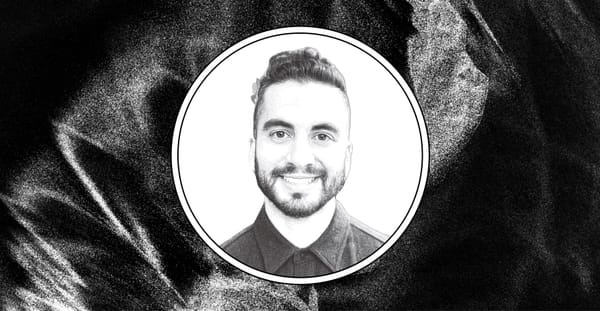
Mike Zimmerman is a co-founder and partner at Main Sequence, an early-stage deep tech fund investing in companies that commercialize breakthrough research from the Australian research ecosystem.
Mike Zimmerman is a co-founder and partner at Main Sequence, an early-stage deep tech fund investing in companies that commercialize breakthrough research from the Australian research ecosystem.

What led you to Main Sequence?
I'm originally from the San Francisco Bay Area, and after grad school got the opportunity to come down to Sydney with Bain & Co. for what was going to be a two-year stint. I met my wife in the first month and fell in love with Australia. Over the last 30 years I’ve moved back and forth between Sydney and the Bay Area but call Australia home.
I left consulting as the first internet boom was happening in the late '90s and started working with startups. I was an executive at a couple of venture-backed companies, was the founder of my own startup out of Australia and along the way started investing. In total about 25 years with a mix of both operating and investing experience. The path to Main Sequence relates to the business I started, BuildingIQ, which leveraged groundbreaking technology created in the National Science Agency here for managing energy loads in big commercial buildings.
The project was about to be defunded inside the National Science Agency since there wasn’t an appreciation for the commercial opportunity. At the time there were some strong tail winds behind the push for smart building and managing both the energy consumed by big buildings and their strain on the energy grid. But inside the labs there wasn’t the right skill set and global awareness of the market factors to understand the value of that technology.
So I ended up building a business from scratch around this technology. It ended up being relatively successful, raised capital over in the U.S. and ultimately listed on the Australian Stock Exchange. This was also an aha moment for me about the groundbreaking research being done here in Australia that wasn’t being commercialised and the potential of that research to impact the world. When the opportunity came to start Main Sequence, it seemed like a very natural progression.
What is Main Sequence?
Main Sequence is an early-stage deep tech fund investing in companies that are commercializing breakthrough research from the Australian research ecosystem. Effectively all the research agencies and universities here. We're very much investing in global companies that originate from Australia and then help take their innovations out to the world. We manage just over $1B Australian dollars - roughly US$700 million - across three funds. It's now a mix of domestic and international institutional investors but very importantly, our founding LP was the Australian government and National Science Agency. They really had the vision to see the potential of Australian research to have an impact in the world and the recognition that the venture model is a good way to have that impact.
We launched in 2017 with the first check and first close from the Australian government, which was $100 million Australian. We've raised about $900 million since then across three funds and have roughly 70 companies. We invest at the earliest stages of a company's life. Two-thirds of what we do is either company creation, pre-seed or seed investments. Everything we're investing in has a global market but also that underpinning connection to some kind of breakthrough research in Australia.
From a thesis point of view, we're very much thematic investors. We focus on what we call planetary challenges. There are six planetary challenges that we focus on. This helps us dive deep into areas and think about solutions that are required rather than just react to things that we're seeing.
Can you walk through those six planetary challenges?
The first area is Bridge the Gap to Space, which is all about how to leverage space for the benefit of planet Earth. The Next Intelligence Leap is all about leveraging advanced computing, communication models and applied AI. Feeding 10 Billion People is all about scaling food systems to meet the needs of the planet as the population grows.
Scaling Healthcare to Humanity is all about democratizing access to high-quality health care to the planet. Supercharging Industrial Productivity, which you might call industrial resilience or intelligence, encompasses everything across the physical world and primary industries like mining and agriculture through to manufacturing. And then Decarbonizing the Planet, which is a bit of a meta theme that encompasses everything from energy transition to low-carbon products as well as enabling technology around carbon markets.
We see all those different themes as challenges that the planet must overcome in order to preserve itself and prosper. We organize ourselves around those themes. We have a thesis around what the major problems are to be solved and use that as a filter for engaging with the research community or founders to try and identify compelling investment opportunities.
The model where CSIRO is your founding LP seems unique. Can you tell me how that relationship works?
We have looked around the world for models that we can learn from, and it feels like we're breaking some new ground with this. Kudos to the CEO of the National Science Agency and the prime minister at the time who led this foundational investment for us. Building deep tech companies is hard enough, but building global companies out of Australia adds another layer of challenges. The goal here is to give as much advantage as possible to these deep tech founders and companies.
The National Science Agency here is an absolute treasure. It's the most trusted brand in Australia. Most people would not know, but CSIRO is in the top 1 percent of science agencies in the world. They do things like manage NASA's space infrastructure across the entire Southern Hemisphere. They do tons of work in defense. They're a multithemed agency with about 5,000 people and 3,500 advanced-degree scientists. We consider them true partners in helping build and give advantage to our companies. We generate tons of leads or opportunities out of the National Science Agency, but we also leverage them for things like due diligence. We curate collaborations with the National Science Agency and other universities with our companies.
Once we fund them, we can leverage their infrastructure. They have billions of dollars of infrastructure. We can leverage those for companies so that they don't have to spend millions of dollars to build new plants or buy new equipment. We're trying to give every advantage we can to these young companies so they can compete globally.
The primary focus is to deliver great returns to investors, but obviously with the government backing, the rationale is to stimulate research translation and tech transfer. We also want to change the culture in the research ecosystem. Just as we have with Atlassian and Canva down here, shining role models to entrepreneurs in the software world, we want to create shining examples out of the research ecosystem for researchers to think commercially from day one. For those folks in the applied spaces, we don't want stuff being left on the shelves and languishing in labs. As a result, we do a lot of work engaging with research teams and the tech transfer offices at all the various universities and research labs.
Australia's space sector seems to be growing rapidly. Is that representative of the broader deep tech ecosystem there?
The space ecosystem here has really developed. We have a number of fantastic companies not just in our portfolio but across the whole ecosystem. Australia is well set up for space with wide open areas. We have a bunch of space infrastructure here already. You probably know that the first steps on the moon were transmitted from Australia from the Parkes satellite dish. Because of the position of the moon relative to the Earth, the Southern Hemisphere was the best vantage point. You can actually go visit the Parkes satellite that transmitted it in New South Wales.
We also created something called the Square Kilometre Array, which is the most powerful radio telescope in the world. It's a network of thousands of satellite dishes ingesting an enormous amount of data. We were able to get the commercial rights to the IP behind that and are building a space domain awareness company leveraging that IP. There's also a lot of expertise here in remote sensing. Big wide open areas, agriculture, mining, land areas to be monitored through satellite data, drones, airplane surveillance. The ecosystem has really taken off and we're now probably one of the most active space investors in the world. I think we have eight or nine different space companies at any one time across all different parts of the stack. That's one of the places where we think Australia has a great role to play in the global ecosystem.
You've been a founder and operator yourself. How has that influenced what you look for in founders?
To do what we're doing well, you have to really understand the painful journey that a founder has to go on. All five of the founding partners have been founders themselves, which has been really useful. At the stage of investments we're working at, there is often a lot of teaming and partnering with founders in a way where the founder might be a scientist who's never started a business before. By understanding the journey founders go through and the challenges they encounter, we can build trust and better anticipate where things might go wrong..
It's a balance because in deep tech you obviously have to have domain expertise in your area and real insight into the technology, where the state of the technology is both in Australia and globally, as well as an understanding of where the market is heading. Another key thing that we have come to believe very strongly is that the learning gene is really important. So it's a subtle balance between having some knowledge and expertise around a domain area and then the ability, or the humility, to say you don't know everything. Things are going to evolve and therefore you need to be open to listening to the changes that are happening in the market or in the technology space.
We actually have a phrase: is this founder a learner or a knower? Even though in some ways you'd think having the expertise, someone who really knows what they're going after and where things are, would be ideal, actually the ones who have been most successful are the learners. They're the people who start out with conviction and have the expertise, but they also have the humility and awareness to be absorbing information along the journey and course correcting.
One of the biggest insights has been the importance of storytelling in the journey for these founders. At the earliest days of a deep tech company, you are trying to paint a future that no one knows exists. You have your unique vision of a future and you have to convince everybody around you to come along with you, even though all the odds are stacked against you. Storytelling is a very effective platform for various things. The first is getting early employees on board, especially if you're trying to recruit people with a lot of expertise or experience. They have no business joining your tiny little startup that has a little bit of funding. But if you're a great storyteller, we've seen that you can be compelling enough to attract people.
The second group that needs to hear great storytelling are customers and partners. Why would a big global customer spend time on your enzymatic recycling company or your revolutionary new dyeing treatment for textiles? Storytelling is the bridge that can get you there. Then lastly, the investment side. It's the mix of expertise and market awareness globally, understanding the competitive set. But mostly it's painting that compelling story to an investor about how this small company from Australia is going to change the world.
It’s become one of the most important things we look for in a founder, and one of the key areas we continue to invest in after coming on board. We actually brought on a head of creative design and have a dedicated team within our investment team that we throw at founders before they go out to do fundraising to work on their storytelling and content.
Within supercharging industrial productivity, what's exciting to you right now?
The short answer is physical AI. There's obviously a massive revolution going on in the AI space, but we very decidedly are not playing in the shallow tech versions of that. We think the big unlock in the world is how generative AI impacts the physical world. It's also very challenging when you think of some of these legacy industries. We do a lot in mining, manufacturing and food production.
We've actually been investing in physical AI since the early days of the fund. It just wasn't called physical AI. If you think of the first sensor companies we invested in, the companies that are providing services with sensors and data and drawing insights out of that as they try and digitize these physical workspaces. Now we're investing in vertical robotics and automation solutions. We're not trying to be too broad or expansive there, but we're really trying to find the places where an understanding of the customer problems and environments married with breakthrough technology, some kind of robotics with a generative AI enhancement, that brain that goes into robotics, can make a huge difference.
A recent example is a company called Breaker, which is taking language models and putting them onto robotic platforms to enable robots to act more like team members. Their first vertical is on drones in defense for helping forward-deployed operators in reconnaissance and surveillance. If you have seen Star Wars, it's like having R2-D2 and C-3PO there with you where you can actually just talk to your robot companion. They understand what the objectives are, they can execute, they can team with other robots. That's a good example of a very verticalized robotics plus AI solution in the physical AI space. We think there are tons of opportunities there. It is very challenging to collect the data, understand the different domain environments and work alongside humans.
How do you define deep tech?
Deep tech is solutions that you can't build in your garage over a weekend. Really, we're looking for breakthroughs. In our case, we're looking for breakthroughs that come from world-class engineering and scientific research that are not easy to replicate and give you both an initial edge and help you maintain that ongoing advantage as you build your company for the world.

Infinite Frontiers is made possible by HAUS, the leading public relations and creative agency for deep tech startups and scaleups.