Critical Mineral-Free Batteries for America’s Data Centers with Group1’s Alexander Girau
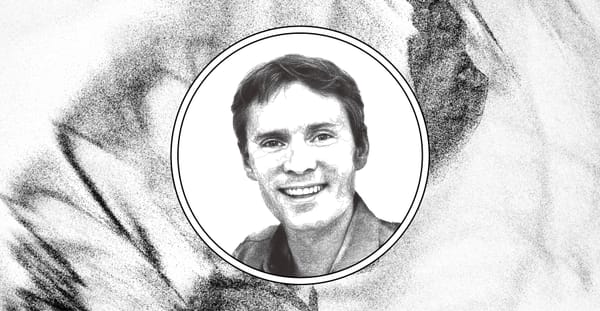
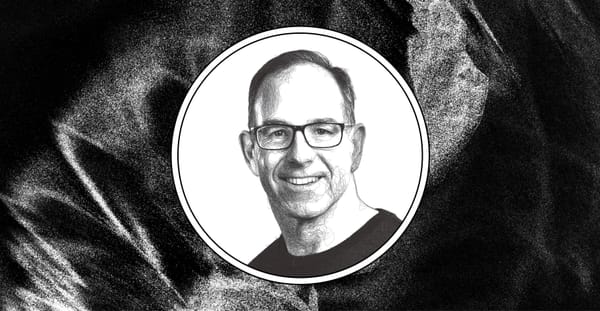
Alexander Girau, CEO and cofounder of Group1 and Energy Transition Fellow at UT-Austin’s Energy Institute. Group1 builds critical-mineral-free potassium-ion batteries for data centers and national security.
Alexander Girau, CEO and cofounder of Group1 and Energy Transition Fellow at UT-Austin’s Energy Institute. Group1 builds critical-mineral-free potassium-ion batteries for data centers and national security.

What led you to start Group1?
My path to Group1 was forged by three lessons from places where systems fail and must be rebuilt. Surviving Hurricane Katrina was first: when infrastructure collapses, it doesn’t just disrupt services, it dislocates identity. That hard-coded a filter I still use: what’s truly resilient, and what actually scales under stress? Not what looks elegant on paper, but what survives the coupling of physics, policy, and people.
Next came PhD research at Tulane Chemical & Biomolecular Engineering, working on novel manufacturing process for silicon nanostructures—“quantum dots.” That broader field later earned the 2023 Nobel Prize in Chemistry. It wasn’t my exact system, but it was my first real brush with Nobel-level science and translating first-principles materials toward manufacturable pathways.
After Tulane—before startups—I went into industry to save money and see real scale up close. I worked as a chemical process engineer on multi-billion-dollar projects at Shell, Exxon, and Marathon. Inside those plants and refineries I learned what scale really requires: process control, yield learning, safety envelopes, supply orchestration, and patience.
I then continued my energy-transition work as founder of Advano (YC S17), pivoting the silicon platform from gene therapy to batteries because it offered a clearer path to manufacturability and a larger system need. YC works for deep tech if applied selectively: keep tight feedback loops, value discipline, and user focus; discard “ship now, certify later” tropes that don’t survive UL timelines, yield curves, and supply-chain dependencies. Across Tulane, industry, and Advano I collected 16 patents, which is less about the count than that the IP maps to systems that scale.
The final catalyst was UT-Austin and the Goodenough lineage. A past Advano colleague, Dr. Leigang Xue — then a postdoc in Professor John B. Goodenough’s lab (the Nobel laureate, co-inventor of lithium-ion) and now my co-founder — brought his potassium-ion work to me. Leigang and I share roughly 10 patents, so when he called I listened. I brought in Dr. Yakov Kutsovsky (now also a Group1 co-founder) to do diligence it. After three months of trying to poke holes, we saw no red flags and said, “If we don’t do this now, someone else will.”
It clicked not because it was novel but because—by our assessment—it was the most compatible, drop-in battery technology on the planet. That compatibility at scale is why we started Group1.
What makes potassium ion batteries different from existing battery technologies?
At a high level, potassium-ion enables us to build safer, higher power, drop-in batteries on existing infrastructure without relying on lithium, cobalt, or nickel. That’s why it’s seen as a credible alternative to LFP, starting with UPS as data center backup batteries.
Two simple reasons. First, it’s truly drop-in. Potassium works with graphite anodes, so the world’s existing anode know-how and nearly all process equipment can be reused. You’re mostly changing the cathode and dialing the electrolyte, not re-platforming a factory. That’s a huge advantage over sodium: sodium isn’t compatible with graphite, so it forces an anode rethink and more disruption than people admit.
Second, the performance fit. Versus sodium, potassium operates at a higher average voltage, resulting in a higher energy density. And compared to lithium, potassium ions move more easily in the battery, which means faster charge/discharge capability and that’s exactly what UPS needs for instant power. Layer on potassium-ion’s intrinsic safety, and you get a friendlier system for facilities and certification.
And if one day, the sustainability advantage with lithium narrows then Potassium will still holds two inherent edges: higher power and better safety. That’s why we chose it. It’s not about chasing the most significant lab number—it’s about a chemistry that manufacturers can adopt quickly and operators can trust.
Why are data centers such an attractive market for your technology?
Data centers are extremely power-hungry. As you add load, you stress the internal grid. Batteries stabilize that system and bridge outages. When there’s a blackout, diesel/LNG gensets spin up, but they’re not instantaneous, so UPS batteries must deliver power right now. And this is very dependent on the dischargeability, which happens at the cathode, which happens to be the component where potassium-ion has a clear advantage over lithium-ion or sodium-ion batteries.
Operators are chemistry-agnostic. They don’t care if it’s lithium, sodium, or potassium. They care that it works, passes safety and performance requirements, and doesn’t complicate operations. This is a market-pull situation: facilities teams are actively looking for solutions that reduce risk and integrate cleanly. By contrast, EV is more of a technology-push. You spend cycles evangelizing and re-platforming.
What I like to say is: if you deliver, you win. And unfortunately, even if every battery startup had wild success, we would still be underserved. We need everything. This isn’t lithium versus sodium versus potassium. We need everything.
How does Group1 address the geopolitical challenges of battery supply chains?
The reality is most of the lithium-ion chain—materials, processing, and a big share of cell manufacturing—runs through China, and the vast majority of graphite comes from there. The best LFP tends to stay in China — even though it was initially invented at UT-Austin in Professor Goodenough’s lab — and exports are often older-gen. Potassium helps because we’re not tied to lithium, cobalt, or nickel, and the raw material is a fertilizer —potash—that is widely available in North America, so a domestic path exists. But the real moat isn’t just minerals. It’s manufacturing know-how. China built that over decades; you don’t compress that into two years.
Our approach is pragmatic: choose a chemistry we can localize; keep the most critical steps in the U.S. where quality, safety, and IP accrue; work with world-class partners to move fast and absorb the right manufacturing discipline; build to UL safety certification from day one; and march toward full-stack control in the U.S. as we compound learning. That’s how you turn a geopolitical problem into an actual manufacturing plan.
What does success look like for Group1 in 10 years?
Professor Goodenough’s work set the bar for practical battery breakthroughs. His lab gave the world LFP. Our ambition isn’t to lean on that legacy; it’s to extend it. 10 years out, potassium-ion is a quiet backbone where it fits best: keeping data centers online during grid events, powering defense systems that demand high power without drama, and showing U.S.-made batteries can scale without fragile supply lines.
Practically, that means ubiquity in our lane. Group1 packs and cabinets across UPS for data centers, with spillover into telecom, edge compute, defense, and industrial racks and a sovereign supply chain that’s real, not aspirational. The critical steps live in the U.S., and the know-how accrues here. Do that with disciplined certification and boring reliability, and potassium-ion stops being “new.” It becomes infrastructure. That’s the American battery platform we’re building.
How do you define deep tech?
Deep tech typically lives in the last 10% of scientific risk. It’s not a research project and not yet “hard tech.” I like to spin tech out of universities when it’s 90% baked with 10% real science left. That last bit gets finished by collaborating with professors, postdocs, and grad students. Then we productize it so the science risk goes to zero. At that point it stops being deep tech and becomes hard tech.
It’s not usually VC-friendly unless you want first-mover advantage, narrative control, and a blocking IP position. Basically, the chance to define and own a category. That takes conviction: you fund the final science, design for yield and safety, and build an industrial system the market can actually adopt. Deep tech has a real scientific component left; hard tech doesn’t. Deep tech is the moonshot plus the plan to land it. Closing that last 10% and making it work at scale.

HAUS specializes in public relations and creative services for deep tech startups.