Funding the Future of European Deep Tech with Zaz Ventures' Stephan Decher
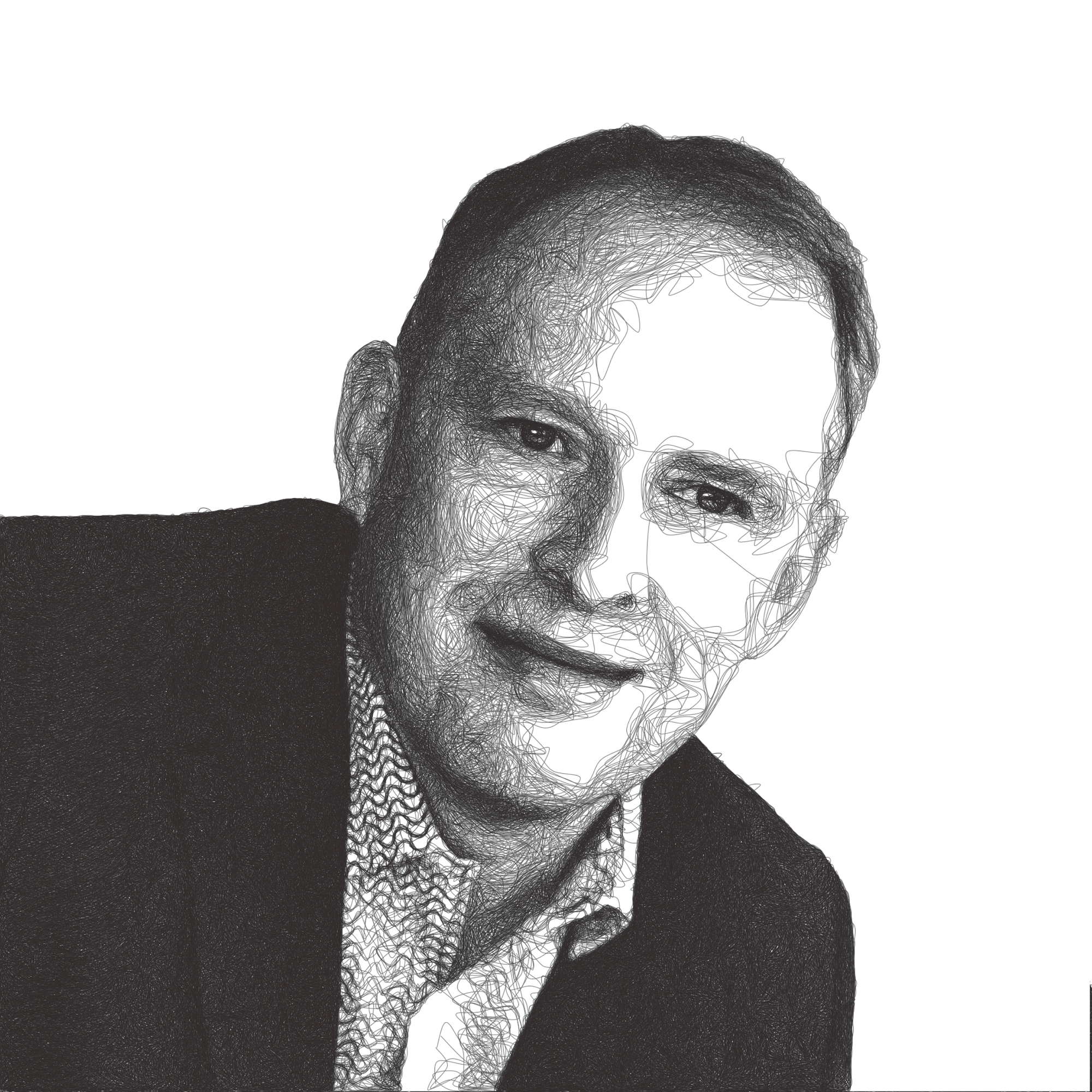
Stephan Decher is a managing partner at Zaz Ventures, a capital advisory firm that helps deep tech companies secure European Commission funding on a success-fee basis.
Stephan Decher is a managing partner at Zaz Ventures, a capital advisory firm that helps deep tech companies secure European Commission funding on a success-fee basis.
What is Zaz Ventures and what do you do?
We are specialists in European Union (EU) funding for deep tech. The angle here is that deep tech needs longer development cycles and more capital than the average startup. European funding is particularly relevant because the EU Commission wants to help innovations that have been developed with EU research funding reach the market and scale. It doesn't have to be previously EU funded, but in many cases the IP has been funded by national research institutes or EU programs. These are long-term innovations that are impactful for the future and help Europe to be more sovereign and maintain its technological edge. They help create a new industrial landscape and contribute to the societal challenges that Europe faces.
Our business model is to pick the best deep tech companies and work with them on European funding on a pure success-fee basis. We entertain the funding risk. As a result we are getting paid often later than one year after engagement. This model aligns us with the risk profile for the company and puts us in the same boat. Contrary to many people's perception, it drives collaboration. We set expectations right from the beginning: without the founder's quality inputs, the application will not work because they have to justify it in a final interview in front of a jury and really be able to explain their business.
We carefully evaluate all success factors of a candidate company and then pick the best. The companies the European Commission wants to fund are the same kinds of companies that investors want to invest in, once the tech risk is substantially reduced. They're just at an earlier stage and still need quite a bit of development before they're attractive to private capital, typically around technology readiness level six with a relevant prototype but still two, three, four years away from market. The sweet spot is companies in the seed to Series A stage.
The European Innovation Council Accelerator is the big instrument here. It's about 650 million euros a year that the Commission spends on deep tech, and over the last 10 years roughly 10billion euros of taxpayers money have gone into this space. That makes the EIC the biggest single entity in Europe putting funding into deep tech. Zaz Ventures has built a very substantial market position. We can say that we have excellent access to the market and are maximising the chances of funding for each deeptech company we are working for. We have now been successful with over 170 companies over the past five years alone.
What's your background and how did you come to Zaz Ventures?
I have a background in energy. I worked in the dirty energy industry first, in market intelligence and then for a risk management software company in the power markets. Later I moved to clean energy with New Energy Finance, which is now Bloomberg New Energy Finance. They report on and analyze data on clean energy investment markets. I worked for three venture-backed companies overall, then co-run a small corporate finance boutique in cleantech. It was good but not a really sustainable model at the early stage. Then the public funding opportunity emerged when the European Commission launched what was then called the SME Instrument. I found my business partner at a networking event and he was already involved in EU funding. We said, let's do this and focus on this instrument. We are now over 80 people after 10 years.
How do you select which companies to work with given that you only get paid on success?
We are rejecting a lot of companies. The technology needs to be breakthrough, something that is genuinely novel and opens up new use cases and business cases. Then there are other factors: some validation through existing funding from reputed investors, a good network around them, a strong management team. These criteria are not that dissimilar from what seed investors look for. The difference is that public funding is OK to see some risks because the Commission is about de-risking toward private investors. Companies pitching to private investors are always minimizing risks, but here it's about highlighting them and explaining how you mitigate them. While this is the case, the commission insists on seeing a prototype with proven validation of relevance to the first target market. Without that funding is unlikely to be granted.
The Commission doesn't want to fund companies that just absorb public money. They want to fund companies that then become attractive to private investors. They call it "crowding in" rather than "crowding out." They don't want to replace private investment. They want to de-risk so that private investors are attracted to put money into these businesses. We are looking at that question constantly: Is there justification for public funding at this stage, and how do we make that case?
We also check for a venture mentality. Does the company understand they have to go through different stages of funding to reach a scaled-up stage and capture an attractive market? Some companies just want to stay as niche lifestyle businesses. That doesn't work here. This is about creating bigger companies and allowing investors to have a stake. So we check for breakthrough innovation, attractive markets, strong teams, and a venture mentality. No company is perfect, but those key parameters need to be in place.
What separates the founders who secure funding from those who don't?
The founders who succeed are venture-fundable people. They have a vision for their business and can articulate that vision along with the technology and its benefits. They can lead people, assemble a team, and tie it all together to execute on their business plan. They're often experienced, maybe 10 years out of corporates, though there are also straight Ph.D. founders who worked something out in their thesis and decided to do a startup. They're learning on the job how to run a company, but these are aspirational people who believe in what they do. There's a large degree of passion and drive.
The biggest mistake I see is around communication. It's not easy to explain complex technology in a way that evaluators with a technical background will understand. Companies get so entrenched in their own business that they lack the distance to communicate it clearly. We often end up structuring the case and building the storyline in new ways. The best founders are happy to be challenged because they know that questions lead to new answers. They're figuring things out that will ultimately make them more complete as businesses because they're living in the world of uncertainty. These companies haven't found their ultimate product-market fit yet. They have good technology and an idea about the market, but the exact fit that makes them successful is still not defined. That journey involves several iterations and a willingness to test things out. Nobody really knows what will work until they try.
What trends are you seeing in European deep tech?
We see more deep tech startups across the board. There's still growth in the field because the spinout units of research institutes and universities are getting better. The idea of spinning out companies, maintaining a stake, and helping founders grow out of an academic background into business is more common now. There isn't really a lack of innovation in Europe. We have a lot of good ideas and young companies. Growing them is a different matter.
In terms of sectors, quantum computing is really attractive right now with a lot happening in terms of both private and EIC funding. The Commission still likes cleantech, which the private market is less enthusiastic about at the moment. There are some really good technologies on the carbon capture side, in recycling, and in battery technology. Battery tech is an important area with some good startups, though it's tough for Europe given our weakness in batteries. Semiconductors is another booming sector with good fabless semiconductor design companies coming up. Integrated photonics is interesting, particularly in the Netherlands where there's a strong ecosystem. These are technologies that have a long history of EU funding and are quite mature now. It's important to double down to make sure these ecosystems stay in Europe and become globally competitive. The space sector has seen a lot of traction too. While European companies are lagging behind the US, there is considerable innovation coming to market enabling a lot of real business potential on the ground.
Fusion energy is another very interesting sector. We worked with Proxima Fusion, which has now raised over 400 million euros despite being only three years old. We worked with them very early when they raised six million. Fusion is still at least 10 years away, but it's very promising, and investors are willing to put money in because we need to solve the energy problem.
You mentioned the Commission is more willing to fund cleantech than private investors. How do you square that?
Investors are interested in cleantech, but they're super selective. It may be hard for some companies to get the follow-on funding they really need. With the current political environment, anything green has taken a bit of a hit, but that will change eventually. I've worked in climate tech for over 20 years and it's always been a challenging area compared to software or semiconductors. Founders need to be careful not to get into something that doesn't have a clear business case. The margins are just too low in some areas. If you have a classic hardware business with a 20 or 30 percent margin, you want to avoid that. You want at least a 50 percent margin to have flexibility, because if you get under pressure, your margin disappears too quickly.
How does Europe avoid brain drain and losing its best companies to the U.S.?
The biggest part is funding. There are enough brains in Europe, but the funding is not ample enough in the riskier stages, and "risky" still includes what we would call scale-up. We need to deploy more European capital in Europe rather than elsewhere in the world.
Europe doesn't have a shortage of capital, but a lot of it is invested in the U.S. stock market or other places outside Europe. The trust of investors is not quite there that it's worth investing more in European companies. The markets are too fragmented. It's too difficult to scale in business terms. If you're in France, you deal with French authorities in French. In Italy, you deal with Italian regulations. The differences between countries are still too big compared to the U.S., which is just a much bigger, more unified market. I'm not sure this can really be changed. It cuts very deeply into culture and regulation, and national interests are very strong, particularly now in a phase where national interests are becoming even stronger.
Europe is in a tough spot. The traditional model in European venture capital has been to set up a company, run it for five years, and sell it to a corporate. Very rarely did those companies IPO. What Europe really needs is a new generation of large companies because the old corporates that are 100 years old still dominate the market. Only a handful of companies of significant size have come up in the last 30 years, which is quite opposite to the U.S.
Most European funds are 100 to 200 million euros with very few at half a billion and virtually none at a billion.The Commission is trying to address this. They created an instrument called STEP to put equity into 50 to 150 million euro rounds and they're creating bigger venture funds like the Scale up Fund which starts investing out of 5bn euros raised this autumn. 1bn euros comes from the European Commission, the remaining 4bn euros are raised from European corporates, banks and insurance companies. The Scale up fund may signal a change of tact in Europe. We may see several of those funds emerging over the next few years which would change the balance of power and give the start-up world a bigger share of the market and a much better chance to scale and create future proof jobs. The next five years will probably be critical. Europe needs to develop strongholds of technology and make them so deeply integrated in complex European networks that they're difficult to migrate elsewhere. That's the path forward.
How do you define deep tech?
IP-rich companies that need a long time to develop and significant capital to get to market. There's complexity and novelty around the IP and a potential to transform the market or create new ones. These are really the most important factors.

Infinite Frontiers is made possible by HAUS, the leading public relations agency for deep tech startups and scaleups