Reindustrializing America's Water with 4Earth's Jahanzeb Khan
Jahanzeb Khan is the founder and CEO of 4Earth, an industrial water technology company building productized, AI-driven systems that treat and reuse wastewater on site for factories, plants, and data centers.
Jahanzeb Khan is the founder and CEO of 4Earth, an industrial water technology company building productized, AI-driven systems that treat and reuse wastewater on site for factories, plants, and data centers.
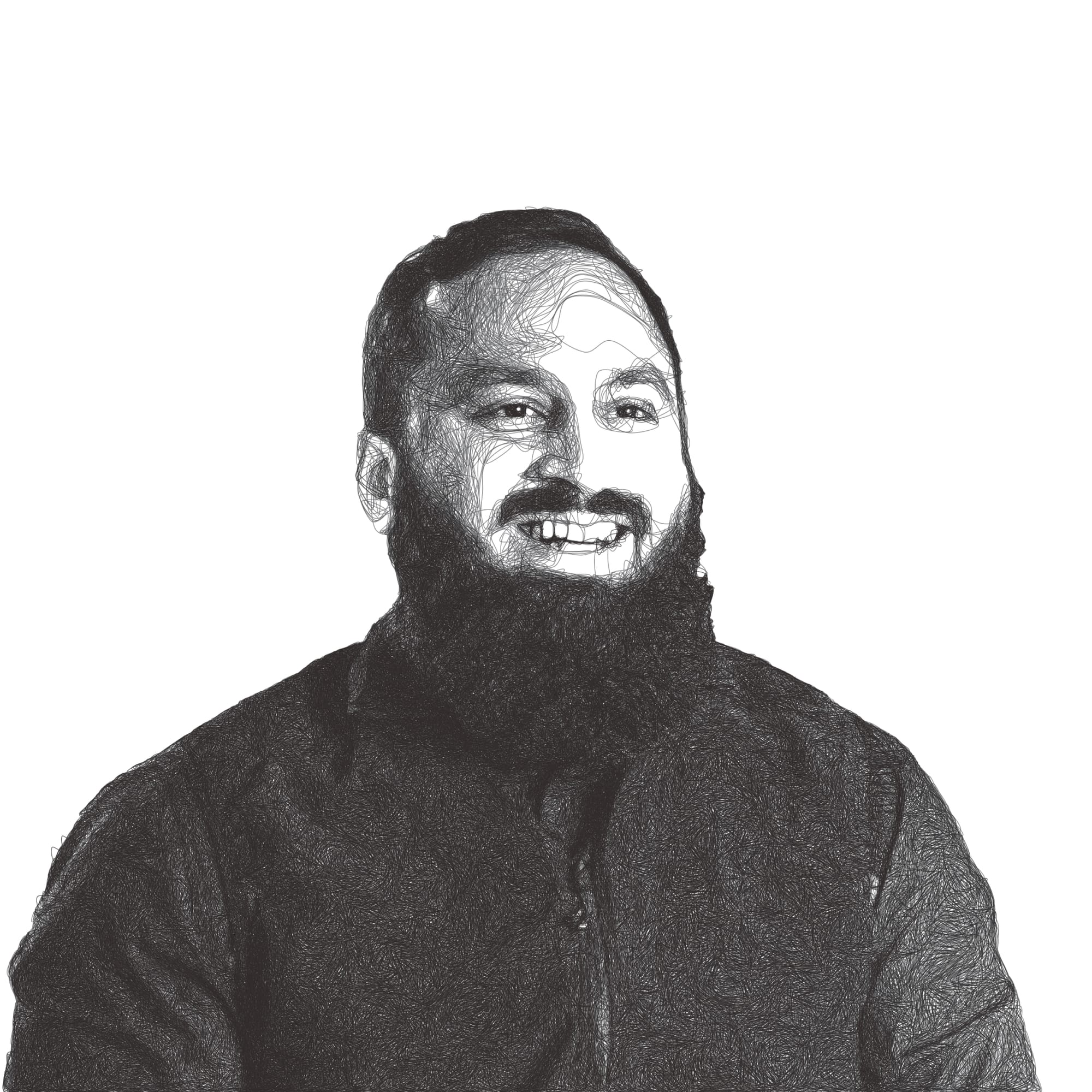
You have one of the more unique founder origin stories we've come across. What's the path from MMA fighter to deep tech founder?
Before I got into engineering I was an MMA fighter for a few years while I was in college. I had some success in the game and was ranked number two in Georgia in the advanced amateur circuit at 145 pounds. I was about five weeks out from fighting for the regional title when I had a philosophical change of mind, due to my faith. I was hurting people for a living and risking myself, and I started asking whether that was really the path I wanted. My whole goal was to make it big in fighting and then use that platform to help solve major problems like water, energy, and the future of industries. But I realized I could just do that directly through engineering, technology and business. I was at Georgia Tech, so I was positioned pretty well to take advantage of that situation.
I left the fight game and went deep into engineering. My background is a mix of process engineering, materials, and AI and machine learning. I gained experience in the water and energy industry while also working with a larger overseas company that was building startups here in the U.S. I was also working on my PhD at the same time. I got through my qualifiers and earned candidacy, but then I left about a year before defending my thesis to start 4Earth. That was over six years ago and it was one of the best decisions I ever made.
Walking away from both a title fight and a PhD takes serious conviction. What drove those decisions?
Both were tough, especially the MMA side because I had put a lot of time and effort into it. I was training with really good people and my career trajectory was solid. But my major goal was always what I'm doing now, so I figured I should just take a more direct path. The same thing happened with the PhD. My research was in this arena, but I felt I could have more impact making products and services to solve this problem than finishing out my thesis.
I've always been wired toward entrepreneurship. I come from a family of industrialists and people involved in business. Even when I was fighting, I was selling my own tickets. So when I made the shift to 4Earth full time, it felt natural. I was happier. The startup world moves at a different speed than academia. You have to iterate fast, build, break, rebuild. In academia, the goal is to prove your thesis thoroughly through peer review and publications. Both are important, but I'm naturally inclined toward engineering and building technology. I think the question anyone in that position has to ask themselves is: What's more net positive to society, you staying in the lab or getting out there and commercializing?
So what's the problem that pulled you out of the lab? What is 4Earth tackling?
If you zoom out and look at the whole Earth, 80 percent of global wastewater is untreated and underutilized. We know that wastewater has things in it, including water, materials, and even energy, that can be treated, extracted, processed, and reused in our industries. If we're going to be making more cars, more robots, more clothes, more food, we're going to need more water. And if we're doing that, we're going to generate more wastewater. If we don't solve this problem, there's going to be a bottleneck somewhere.
When you zoom into a factory, every day they're bringing in water to run their processes and generating wastewater on the other end. They're paying for water in and paying for water out. Some chemical plants and heavy industry are paying up to 50 times more to discharge their wastewater because they have to truck it off site. That cost could be significantly reduced with on-site technology that treats and reuses it right there in the facility. There's a lot of use for water in these factories, whether it goes directly back into the production process or into cooling towers and other indirect uses. You can make that resource cleanly available on site without sending it to the city or trucking it off site.
Given the size of the opportunity, why hasn't this been solved already?
Conventionally, we use large centralized treatment plants. All the wastewater from homes, industries, and factories goes to a central plant, gets treated, and gets discharged to a river. Then another plant picks it up, treats it again, and sends it back to the factory. This is happening across distances of thousands of miles. On a systems level, that's not the most efficient approach for every case.
Even factories that have tried to solve it on site face a fragmented process. They hire an engineering firm to assess the problem. A construction company builds the plant. They source components separately. A controls company comes in and does the integration. It ends up being a big construction project with all the cost, time, complexity, and uncertainty that comes with that. What we've done is take all of those pieces and productize them into one solution that plugs right into a factory. We hook up utilities, hook up power, treat the water, and give it back. We save a significant amount of time and cost by eliminating that fragmentation.
Is the innovation at the component level, the system level, or both?
A little bit of both. We like to look at it as the entire product rather than just one component. We're more of a car company than a battery or engine company. We build the whole system.
The goal on the membrane side is to use the most advanced materials, things like silicon carbide and aluminum oxide that are more durable than conventional options. We're doing some of that work in house and also have strong collaborations with some great companies. Then there's process engineering. We have a reactor before the membranes where we spend a lot of time on innovation around chemical types, timing, mixing, and using machine learning. And the third layer is tying it all together through automation and AI. At a base level, the system operates autonomously using our set points. Then we're taking it further by using sensor fusion and computer vision to make the system improve over time. It's a full-stack solution where the membrane is like our engine, but the other components make the complete vehicle.
You mentioned wastewater contains more than just water. Is there a future where your customers aren't just saving money but actually generating revenue from what comes out of the pipe?
That's the goal. Wastewater has water, materials, and energy in it. Right now we're focused heavily on the water side and in some cases the heat energy. If the city gives a factory water at 60 degrees and they heat it to 150, by the time it reaches the wastewater it might still be at 90 or 100 degrees. We can recapture that delta and give it back to them.
Over time, we want to get into extraction as well. When you pull materials out of wastewater, those can be sold as byproducts. That changes factory to factory depending on what they're making, but it's definitely on our roadmap. Imagine if valuable materials and critical minerals could be extracted onsite and utilized.
Where does 4Earth stand today in terms of traction and customers?
Firstly, a big shout out to my team at 4Earth. This includes our internal team, investors, partners and collaborators, and customers.
As with any deep tech hardware company, the first few years involved heavy R&D and external testing. We were quite blessed to get to test with some big names like the City of Atlanta and General Mills. Within the last couple of years, we really pushed into the market and landed customers like Mercedes-Benz, Cox Enterprises, Central Life Sciences, and Ruby Collins for industrial applications. We also secured two major partnerships, one with Cox Enterprises and one with Siemens.
Our supply chain is tight. We have good terms with our suppliers and they're invested in pushing forward with us. That matters a lot when you're manufacturing your own product here in the U.S. We've now implemented it in four states: Texas, Georgia, South Carolina, and Tennessee. We're continuing to do more work with the same customers while also branching into new states and new accounts.
What are the biggest lessons from scaling up manufacturing?
The first is cost control. Finding better materials, better sourcing, and negotiating strong terms with your supply chain. I've heard a lot of founders say this, but terms are sometimes more important than pricing. When you're building a big machine and getting paid in milestones by your customer, having good payment terms with your suppliers means you're not burning through your cash reserves.
The second is design for manufacturing. We say DFM is a mantra at 4Earth these days. Going from a prototype to a scalable product, DFM is the most critical component. You can do some custom work when you're building one unit at a time, but if you're building four, five, or 10 units at a time, those workarounds become nightmares. And then there's the machine that makes the machine. We're working on that now. We are already able to build big machines fast, but we are trying to shrink down that time even more.
Third is scheduling. When you're building and implementing multiple units while also servicing existing deployments, the scheduling has to be tight. Coordinating the build of several units alongside implementation and after-sales service is a discipline we've had to develop quickly.
A lot of people think of water as a climate issue, but you seem to see it as something bigger. How do you position 4Earth?
We cover both ends, but we position ourselves as an industrial company. Water is just the beginning. Our goal is to cover a lot more ground over time. We're passionate about industrialization and making things more efficient through AI, automation, and better fabrication processes. The tech stack we're building at 4Earth was designed from the start to be translatable to energy, agriculture, and other processes.
There's a big push in the U.S. right now on reindustrialization, and the question is whether it's going to look like before or be different going forward. We're thinking about how to create more efficient industries as humanity scales. Is there a better way to manufacture? Can we use AI and physical automation to improve how we make things? Those are questions 4Earth is passionate about answering. Our vision is really about creating the next generation of industries and infrastructure.
You're also building a second company, Twistient. Can you give us a preview of what that's about?
I'll keep it super high level as a stealth mode teaser. First-off, a big shoutout to my Co-Founder and early team at Twistient.
Twistient is in the realm of physical AI, meaning how we can use AI to control and adapt to the physical world in a meaningful way, whether that's factories or robotics. We are working at the intersection of cognitive architecture and machines to build technology for accelerated, high quality manufacturing. We believe there needs to be a hard push on our current AI models to adapt and push progress in the physical world.
We're rethinking the architecture. How does AI think, learn and act in embodied environments? How does it reduce learning and training time and adapt to nonlinear environments in real time? How does it use less energy and resources to compute?
Personally spending a lot of time in factories and manufacturing has shown that there is a gap in AI being applied in the physical world, and we are pushing to solve that problem at Twistient. Super exciting and relevant work for this new age of AI and technology.

Infinite Frontiers is made possible by HAUS, the leading public relations agency for deep tech startups and scaleups.