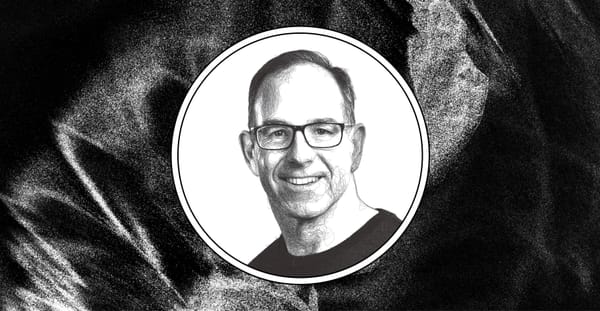
Space Logistics and Mobility with KMI’s Troy Morris
Troy M. Morris is co-founder and CEO of Kall Morris Inc. (KMI), an in-space mobility and logistics company developing technologies to relocate satellites and other assets in orbit.
Troy M. Morris is co-founder and CEO of Kall Morris Inc. (KMI), an in-space mobility and logistics company developing technologies to relocate satellites and other assets in orbit.

What does KMI do and what technology are you developing?
We're an in-space mobility and logistics company looking at how to move assets in space after launch. In the industry, we’d call it Relocation as a Service (RaaS), but for everyone else, we're basically tow trucks for space. We recently demonstrated a crucial piece of our technology on the International Space Station.
The simple idea is that you have really valuable and expensive things in orbit. Wouldn't it be nice if you could move them one more time? The biggest issue in space is that all these existing satellites don't have nice docking plates or plug-in systems. Anything that has an accident or collision loses whatever docking systems it might have had.
While it's great to watch things dock with the ISS in that beautiful surgical dance, it's not scalable. We need something more like a shipping yard with cranes and forklifts rather than surgical precision. That's where we at KMI are developing capabilities to bring down the barrier and increase accessibility.
How did you and your co-founders come together?
The three co-founders met at Northern Michigan University about a decade ago. I was already a student when my younger brother moved into the dorms. His randomly assigned freshman roommate was Adam Kall. When you match a software geek with a hardware nerd, they immediately start building ideas together.
We all had to graduate and leave Michigan because there weren't careers to support us staying. Adam ended up in New York City, Austin in Philadelphia, and I went to Chicago. We did well in our careers but got bored and realized we wanted to make a real difference.
In late fall 2019, we were reconnecting over weekends. Reusable launch was the biggest thing. Everyone was watching SpaceX land rockets. We asked ourselves: What's next? If you have reusable rockets and technology that's more accessible, what's the biggest issue? We identified space debris, and no one on this side of the planet was working on it commercially. So we decided to return to Marquette, MI and build from there. The UP gave us Kelly Johnson of SR-71 Skunk Works fame, and the first rockets to launch from Michigan came from there. It may not be the first place people think of for aerospace, but it's been our home.
What specific problem are you solving?
The problem we identified was that as launch becomes cheaper and more accessible, there's going to be a proliferation of things in space. Space debris was the biggest issue we found, with no commercial solutions being developed in North America.
Starting from first principles, we asked what we could buy commercially, what's already built, and what we'd need to create ourselves. The real problem is that existing satellites don't have standardized docking systems. Anything launched before current standards or damaged in an accident has lost whatever nice systems it had. While surgical docking with the ISS looks impressive, it's not scalable for the upcoming age of the industry.
We built our technology in the modern day without existing standards for docking, refueling or rendezvous and proximity operations. Any standards that get adopted will make our lives easier, but we have the head start of beginning with the hardest case.
It's like the automobile industry: You didn't stop using cars because magnetic trains came around, and they can work together for the best of both. Humanity contains multitudes, and so does our industry. If a satellite runs out of fuel but doesn't die at the gas station, you'd call a tow truck. That's where we come in.
How has building in the Midwest affected your approach to the business?
Building in the Midwest forces you to be capital efficient and have real customer engagement. It's not enough to have cool people with interesting backgrounds on your slide decks. You need to actually do something.
I got to put a quote on my pitch deck from someone at a major multigenerational family office: "KMI might be the most capital efficient I've seen. Holy crap." He said it twice so I could write it down. He pointed out that we went to the ISS on less than a million dollars of equity investment, while he knows companies that can't pick a website or logo for that much.
The Midwest hasn't been easy. Raising capital is much easier on the coasts, which is where we're seeing interest for our next round. But by building here, you learn with your scars. When you have to be scrappy, you find solutions that don't require a billion dollars. From that, we’re meeting customers at delightful price points with desired technology.
What happens next for KMI and what does success look like?
Next, we're moving from the prototype we brought back from the space station to developing the actual product: a larger spacecraft. We've already got partnerships in place and we're working through contracting. The next few years will be getting our hardware and demonstrations into orbit.
If we're moderately successful, we'll change how aerospace operates in orbit. You won't have as much disposal and waste of time, money, and other resources. We can enable reusability, recycling and refurbishment in space. You don't have to be an Earth-loving hippie to recognize that you've already fought physics and fire to get objects into space. The next stages of humanity are enabled once we can use them more than once.
If we're massively successful, we'll bring that positivity back home: improve quality of life, education and opportunities in the regions where we grew up,in Michigan, and beyond. On hard days, the co-founders and I sit back and discuss "space money" plans. Is it building trains? Scholarships and study programs? Giving kindergarteners robots so they can build better than we ever have?
Who are your target customers?
Our main customers are the largest satellite operators: NASA, various government agencies, the Space Force, and commercial operators. Whoever has the most cars needs tow trucks. We're serving national security, civil government, and commercial operators of everything from SiriusXM to weather satellites.
The customers we want to grow toward are the financial backers: reinsurance companies, bankers and large investors who support these space ventures. We're already working with what would have been dream customers just a year ago. We're hoping to announce some of those partnerships later this year or early next year. Now we're moving deeper into the ecosystem to work with those underwriting these huge endeavors.
How do you define deep tech?
Deep tech is technologies and techniques that are a few layers removed from immediate marketability. It's technology from 50 years ago that was sold in the back of science magazines and now we realize, "Oh, that's a microwave in every kitchen."
It's technology that's just out of the lab or just before becoming a real commercial product that could help change the world. It's not necessarily hard tech or soft tech or fintech. Deep tech is a good grasping bucket for things that could have huge implications. Sometimes the implications aren't what we intended, like wanting to treat heart disease but finding applications in different medical settings, as happened with "the little blue pill."
Deep tech sits in that relay race between theoretical science, applied science and commercial consumer edge. I see deep tech as the third runner of that relay race, the handoff between pure absolute science and something that can help the world.

Infinite Frontiers is made possible by HAUS, the leading public relations agency for deep tech startups and scaleups.