Taking drone manufacturing technology into space with Orbital Composites’ Amolak Badesha
Amolak Badesha is the CEO and co-founder of Orbital Composites, a company building autonomous systems, from tactical drones to reentry heat shields, that reshape how aerospace hardware gets built.
Amolak Badesha is the CEO and co-founder of Orbital Composites, a company building autonomous systems, from tactical drones to reentry heat shields, that reshape how aerospace hardware gets built.
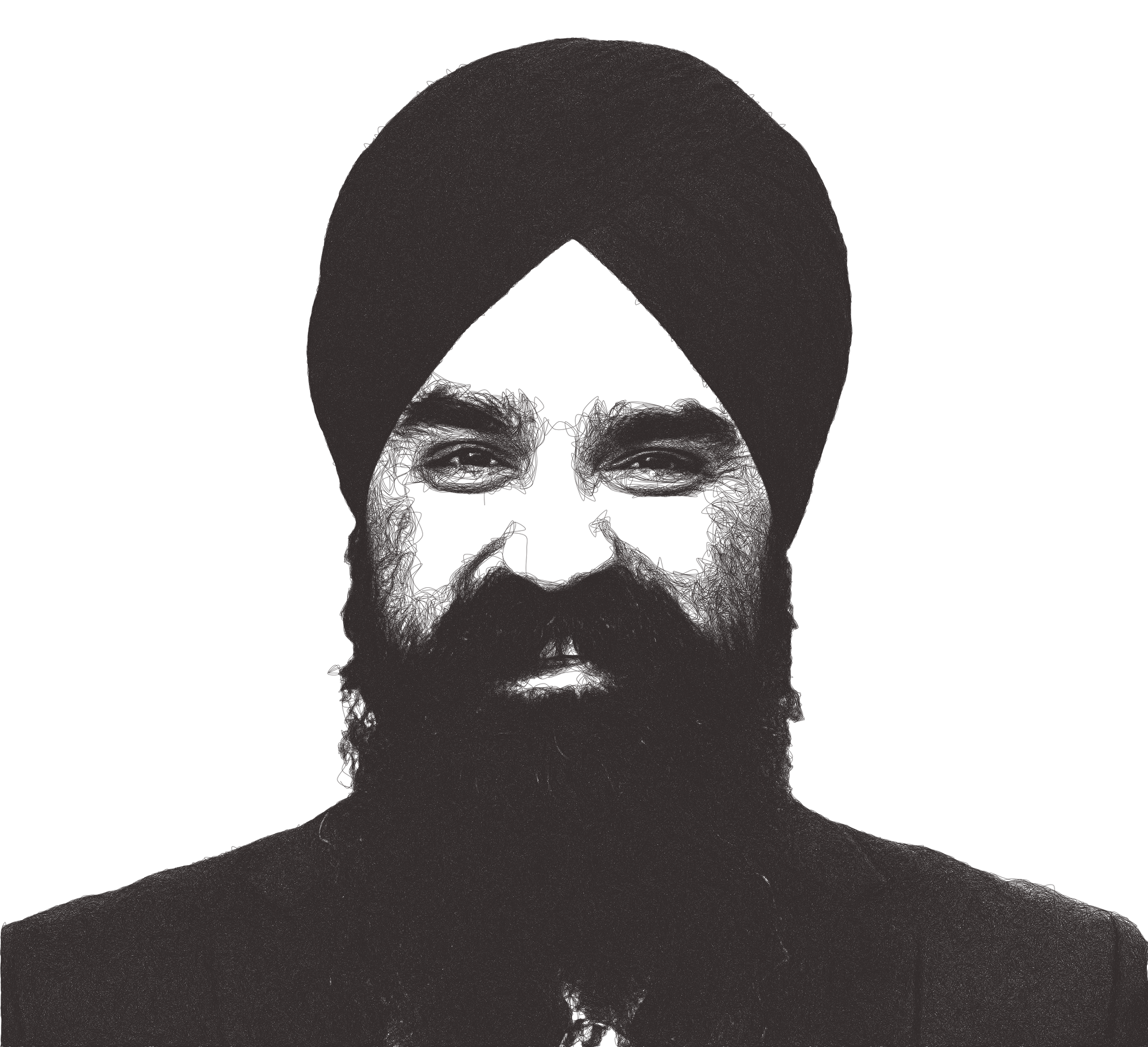
Tell us about yourself.
I’m the co-founder and CEO of Orbital Composites. I previously spent 18 years in the semiconductor industry at companies like Agilent Technologies and Avago Technologies (now Broadcom). I worked on the wireless and radio frequency side, wireless communications, followed by high-speed networking, which is now the big technology that enables large AI data centers. I did a bit of everything during those 18 years: field applications, sales, product marketing, strategic marketing, operations, mergers and acquisitions, you name it. I met Cole Nielsen, who started Orbital Composites, and really got intrigued by what he was building and decided to roll up my sleeves and start building a hugely disruptive company with him from the ground up.
What does Orbital Composites build?
The story of Orbital is multi-layered and quite unconventional compared to typical startups. When Cole started the company in 2014, his original idea was to build the fastest helicopter. Drones were just getting started and quadcopters were taking off. A lot of US companies decided to only invest in the software side. The hardware side of things – how you actually build them – was ignored.
That was a massive missed opportunity by Silicon Valley because we gave the market leadership away to DJI and China. And not just DJI, other companies making larger drones as well. At the time, Cole was 3D printing a lot of drones in his garage. He extensively studied drone design and built more than 50 of his own unique configurations.
But printing them with traditional fused deposition modelling machines just wasn’t that good. If you want to build high performance, high speed, high endurance, high payload aircraft, they need to be lightweight and strong. If you use traditional plastic printing, they break and they’re pretty heavy. We began to reinforce them with fiber by developing our coaxial continuous fiber printing technology. It means you can reinforce the plastic with fiber in any shape and direction.
How are you bringing this technology to the rapidly-evolving drone market?
Before you can build the right products, you need to solve the manufacturing challenges. A lot of people don’t realize that the edge of manufacturing is defined by firstly the materials, and secondly the capability of the manufacturing process. Everybody is stuck at that same edge. If you start with the best materials, which are always composites, and combine that with the complex shapes that a robot can help you manufacture, you can do something unique.
We started building these machines first because we wanted to build the most advanced vertical take-off and landing (VTOL) aircraft in the world and we needed to advance the manufacturing process first. We’ve spent the past decade building these machines at many different length scales. From machines that can make small, very intricate parts, to machines that can produce very large parts and modular systems that you can use to not only build complex structures with the highest performance, but also do it at scale, in high-volume production, and at low cost.
We’re now entering the second phase of the company, which is using and applying this knowledge to solve the most consequential problems today, which are drones. Each domain is going unmanned, whether it’s underwater, over water, air or space. The quantity of manned-to-unmanned systems in the future is likely to be greater than 10,000X. The manufacturing world is not ready for this.
We’ve already built manufacturing systems needed to do that in the last decade and now we’re going to use that to scale production of unmanned systems. We started with advanced materials and robotics and are now entering this phase of productization. We already built a factory where we can build many products and the demand is insanely high for these emerging unmanned systems.
Do you have parallel paths for terrestrial and extraterrestrial applications?
As we were thinking about building the best drone factory, we also realized we have the best satellite production factory. That satellite production can actually happen in space or what I would call the “ultimate edge.” How far can you go and make things over there?
The next big really disruptive capability would be to make things over there, whether it’s in higher orbits like a GEO orbit, or even in the cislunar orbit, or on the lunar or Martian surfaces. The further you go from Earth, the more important it becomes that you learn how to make things over there. If you can ship raw materials and learn how to make things in-situ you achieve incredible cost advantages. But beyond that, you can build structures that are just impossible to put inside a rocket.
If we want to put large antennas in space, for example, we cannot launch our way out of that process. Even with SpaceX’s mighty Starship, the inner fairing size is about 8 meters. That’s the largest single-piece structure you can send. It leaves a huge gap in what we want to put in space versus our launch capabilities.
But what if we could make that antenna over there? The larger the antenna the better. So if we do not have to send the antenna, we could either assemble the pieces, or even better, we could print the pieces of the antenna and then assemble it. There’s no upper limit on the size. That brings you to the space-based solar market. They need kilometer-scale antennas, and it will actually be possible to make and/or assemble them in space. Our issue is not whether you can build these large structures in space because you don’t have gravity there, it is more that we just can’t launch enough or we can’t launch large-enough structures.
This is why in-space servicing, assembly, and manufacturing (ISAM) is very important. The manufacturing part is the most critical aspect because once you solve that problem, you solve all the other problems. To do that, you need to think about sending these printing systems over there, that’s the ultimate edge. That’s a long-term vision and the North Star for Orbital. We were talking about this in 2015 when everybody said we are crazy.
But times have changed. This is why we focused on building the core technology first and to master that to the point where you can do autonomous manufacturing with robotics and you can print all kinds of things. You can print antennas, you can print aerostructures, whether it’s for a drone or for a satellite. You can print power electronics and other things.
Once we master a few of these core capabilities on Earth, all we have to do is take our terrestrial printing system and put it at the edge, in space. People use the word dual-use in many different ways. One way of thinking about dual-use is to build the technology for terrestrial applications, but design it for dual-use for space in the future.
What are the challenges in building a terrestrial market to get to that orbital market?
One of the biggest factors in a startup’s success is timing. You can have the best technology, best team, but if the market and the timing is not there, you’re gonna struggle. In the past decade, that’s been the issue. We were way ahead of our time. But that has changed for both the terrestrial market as well as the space market. We now have strong tailwinds on both sides. They’re actually helping reinforce and accelerate each other.
The tailwinds are very large for the drone market and there are two aspects to that. One is you can do mass production in a factory, the second is there’s also strong interest in doing manufacturing at the edge. On the terrestrial side, when you’re learning how to make things in the middle of nowhere and dealing with the environment, along with all the other factors, that’s another step toward ultimately the space application. The stars couldn’t be aligned any better.
On the space side, it’s the same thing. We’ve planted seeds on both sides. We’re working with the US Air Force on the drone side and with the Space Force on the ISAM side. They’re very nice stepping stone technologies that are immediately useful today while you are also strategically align with their long-term goals.
We’ve tried our best to align our technology development so that we continue to find opportunities today and start developing revenues within the venture timelines. But at the same time it gives you a strategic advantage long term where you have a foothold in this rapidly-growing, commercial, civil and defense space market.
What do you see as your technical moat when it comes to 3D printing composites?
We are the only company that I know of that is fully vertically integrated all the way from building the machines to mastering the manufacturing processes specifically for composites, to building end-products like our Starfighter X drones. For the machines, there’s plenty of systems that can print polymers and the ones that can print metal, but very few can do continuous fiber composites – and demonstrate parts at scale. We’re fully vertically integrated, not just on the hardware side, but also on the software side. We’ll spend a lot of time building internal software for slicing, to toolpath optimization, to toolpath planning.
We’ve started building and demonstrating these highly advanced processes for different applications like drones, satellites, antennas, but also thermal protection systems. We can also print carbon and ceramic matrix composites. These are the materials used for reentry and hypersonics. It’s the same core technology. Our IP, know-how, and trade secrets go all the way from machine building to manufacturing processes to end applications.
What makes what you do such a challenging technical problem?
One is the materials themselves. Composites are notoriously difficult to deal with. Traditionally, the industry uses very expensive robots and materials, known as automated fiber placement (AFP). Those systems are incredibly expensive and they’re also very limiting in the kind of shapes and geometries you can make.
Then there’s the automation and robotics aspect. This is a systems-level problem. You have to optimize everything in the system from materials to manufacturing process with robotics to then the know-how and application.
Traditionally this would mean you have many, many different groups with subject-matter experts that know one piece of the puzzle, but don’t understand the entire system and the end applications. What makes Orbital unique is we’re a systems company. We know how to build aircraft or spacecraft, but we build our own machines knowing where we want to take this technology because the ultimate end goal is to build better aircraft or spacecraft.
Making the fastest unmanned aircraft, whether it’s traditional propeller based or turbine based, going supersonic or going hypersonic, all of that comes back to manufacturing as one of the key limiting factors. At the bleeding edge, when you need better performance, you always start looking toward advanced composites. So we believe we have innovated at the very fundamental layer in manufacturing and now we’re able to go upstream and build some really disruptive products that are not only advanced in performance, but we also have a huge cost and cycle-time advantage allowing us to scale production in a way which is hugely cost effective.
What are you focused on over the next six to 12 months?
We’re raising our tactical round for our TACFI (tactical funding investment) match and this would be our second TACFI focused on demonstrating the disruptive process for reentry shield materials as well as rocket nozzles. We’re raising $2 million for the TACFI match. Following on from that, we’ll be raising our Series A.
The first goal for this fund raise is to get our Starfighter X drone product launched. We have a modular Group 2 UAS we’re developing, which is targeted for all kinds of dual use, commercial and disaster response as well as Department of Defense use. Goal number two is the hypersonic flight test for our materials. These are 3D printed carbon and ceramic matrix composites built with our disruptively low-cost process where we have about five to 10 times cost and cycle-time advantage. The third goal is that we are in the planning stages of our in-space manufacturing demonstration.

HAUS specializes in public relations and creative services for deep tech startups.