Building for the Real World with Rock Yard Ventures' Daniel Dart
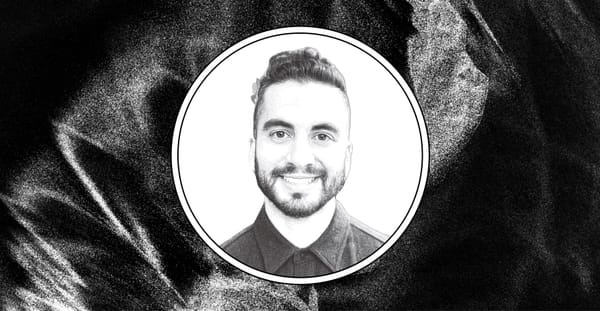
Daniel Dart is the founder and solo GP behind Rock Yard Ventures, a venture fund investing in infrastructure and industrial technologies that serve as the foundation for modern society.
Daniel Dart is the founder and solo GP behind Rock Yard Ventures, a venture fund investing in infrastructure and industrial technologies that serve as the foundation for modern society.

What led you to founding Rock Yard Ventures?
Well, if you want to talk about personal origin story, that's a much longer conversation that reads a bit like Good Will Hunting meets Point Break—you can read it here.
But for this conversation, what matters is: I first discovered venture capital about ten years ago while working with the UN and World Bank in the Middle East and Africa. I was absolutely blown away by how this system we've devised can truly impact real industries that actually build and maintain civilization. People use words now like frontier tech and deep tech, but to me, it really meant: how do we invest in critical infrastructure that we cannot let fail?
Until I got into VC, I hadn't spent time in traditional spaces like university—I didn't even graduate from high school. But I was able to skip undergrad entirely and go straight to grad school. Eventually I got two master's degrees from the London School of Economics, then an MBA at MIT, all with the singular pursuit of one day launching my own firm.
So in a weird way, I founded Rock Yard long before I ever raised a fund. After working at a few other funds in Venture Partner-type roles, I launched Rock Yard officially last year. It's been off to the races since—backing companies like Sygaldry, a new quantum AI company founded by Chad Rigetti (he previously founded Rigetti Computing, RGTI, which trades on Nasdaq with an $8 billion market cap).
Your tagline is "ditch diggers, hammer swingers, garbage collectors." What's your investment thesis?
That tagline comes directly from the firm's name. Rock Yard is named after my dad's construction business. He literally ran a "rock yard," selling gravel, granite, bark, rock—all the materials that go into building things. He served traditional blue-collar builders. Now I'm carrying that torch by serving the digital builders working in those same essential industries.
I like sectors that are real—construction, energy, quantum computing. I want the tough stuff, the things that actually matter to how society functions. I'm not interested in another social media app. I want to back things we cannot let fail.
My early investments were all built around this theory of core needs. Take housing. No one should struggle just to have a roof over their head, the same way no one should struggle to eat. If I can build houses 10 times faster and 10 times cheaper, then access improves a hundredfold—and that's a massive economic opportunity. Now expand that to energy, manufacturing, logistics, waste management, infrastructure. These aren't sexy sectors, but they're essential. And because they're essential, they represent enormous markets that aren't going away.
Here's what blows my mind: I use the same phone as Bill Gates. That's the power of technology driving down costs and democratizing access. We did that with consumer tech. Now we need to do it with everything else that keeps civilization running—the industries that powered the first and second industrial revolutions. We're going through that transformation again today, and most VCs are missing it because they don't come from these worlds.
My thesis is simple: Find ways to make critical needs 10 times better and 10 times cheaper while generating great returns. When I say "garbage collectors and ditch diggers," those are the sectors and workers that matter. That's where the real opportunity is.
Construction is a core focus for you. What's changing in that industry and why has it been so hard to innovate there?
Construction is different than dev tools or social media because it's highly fragmented by nature—you can only drive a hammer to things you can touch. To reach your customer base, you have to meet them locally. And when you tell them you can save money or increase efficiency, historically that's never actually been true. They don't operate at large enough scale to make previous software implementations worth it.
Even though there are some massive construction companies, there are exponentially more small subcontractors operating in silos. That fragmentation made it nearly impossible to sell traditional enterprise software into the industry. The economics just didn't work.
Here's why that's changing: When I think about what AI really means, it's not about what problems it solves—it's about what limitations it removes. ChatGPT removes the limitation of needing to know how to code just to communicate with a computer. Now I can just talk to it and get what I need. That's massive for industries like construction, where individual operators can't justify traditional enterprise resources.
For a long time, small construction firms couldn't afford Salesforce, Oracle, or NetSuite. Not just the cost, but the implementation time and learning curve. My dad's generation never had access to those tools because they were built for Fortune 500 companies, not for someone running a three-person crew.
But AI's ability to structure unstructured data and create interfaces people already know how to use changes everything. You can teach someone like my dad to use these tools in a day instead of a month. If I can help one architect draft 20 homes in the same time it used to take to draft one, that doesn't just increase output efficiency—it means more housing gets built, faster and cheaper. And that cascades into everything else: lower costs, better access, higher returns.
The limitation removal is the unlock. Small operators finally have access to enterprise-grade tools without needing enterprise-grade budgets or technical expertise. That's why construction tech is finally ready for its moment.
Given that AI is becoming so accessible, how do you pick winners? What will differentiate companies in this new landscape?
I've started to shift toward things that have more technical risk than market risk. If I can build a cure for cancer, I don't need to worry about whether the market wants it—of course it does. So the question becomes: what's actually hard to build?
I'm looking for genuinely complicated things, because here's what I've learned: people are inherently doing just enough to not get fired, just enough homework to pass the class. That's human nature. And therein lies the opportunity. Most people are skeptical, slow to change, overwhelmed. That's the wedge.
In practice, this means I'm backing companies building CAD software, permit management software, regulatory and compliance tools—stuff that's incredibly tedious, involves endless forms, and requires deep domain expertise. That's where AI isn't done well yet. The more I know about AI, the more I realize its limitations.
Do I think we may live in a future with robots doing everything? Highly probable, because I would never bet against human ingenuity. But will we have a mass exodus of people destitute on the streets because AI took all the jobs? I don't think so. A hundred and fifty years ago, most of society was agrarian. Now I don't have a single friend who's a farmer. Work changes. People adapt. The opportunity is in backing the tools that help them do that.
You have an interesting perspective on automation and the future of work. How do you see this playing out?
When I think about GDP, it's fundamentally an output function. For a long time, the easiest way to increase output was to increase people. But now we're shifting to increasing output through better tools. People today are significantly more productive than they were 50 or 100 years ago, and that trend will continue.
Here's what I know: I don't know anybody who's ever wanted to be a dishwasher. The minute someone invents a robot that'll fold my laundry, I'm buying it. We automate the things we don't want to do, and we find new, better things to do instead.
People solve for what they know. The tech world is engineer-driven, so kids who grow up coding naturally build dev tools—that's what they see. What's changing now is that people from different backgrounds are entering tech and solving for their worlds.
I grew up in industrial spaces, so that's what I'm solving for. And now that AI has become so accessible, you're seeing this everywhere. People who work in construction and learn about ChatGPT immediately see utility for it. There's this guy I follow who fixes old cars and lawnmowers and challenges ChatGPT with real problems. He'll ask, "I have a mid-'80s three-wheeler making this noise. How do I fix it with materials from Home Depot?" And ChatGPT walks him through it step by step—and it works. That's the transformation: not replacing workers, but giving them superpowers.
How do you define deep tech?
First, I can't answer this question in isolation. For me, deep tech, investing, company building, and human progress are all intertwined. So let me explain how I think about it.
My essential belief is: I'll bet on humanity every time. We have this fallacy of an innocent past where things were so much better, but that's just not true. This idealized past doesn't exist. People say, "Oh, young kids today," but I don't know anyone who'd want to storm a beach getting shot at by machine guns. That sounds awful. I like having air conditioning. I like having a refrigerator. So the question becomes: what are the AC and refrigerator of the future?
It's wild to think we may actually cure cancer. What's in space? I want to know. When you try to comprehend how big space is—that even at the speed of light it would take millions of years to cross—it's mind-bending. Let's figure that out. Maybe Bob's going to lose his job, but let's find him a better one. I don't know a single person who wants to dig ditches or work on a farm just to survive. I want to solve those problems, and that's the opportunity—because a lot of other people want to solve them too.
That's what 'deep tech' is. It's investing in the opportunities these answers present.

Infinite Frontiers is made possible by HAUS, the leading public relations agency for deep tech startups and scaleups.