Dragging general aviation out of the 1940s with Skyryse's Mark Groden
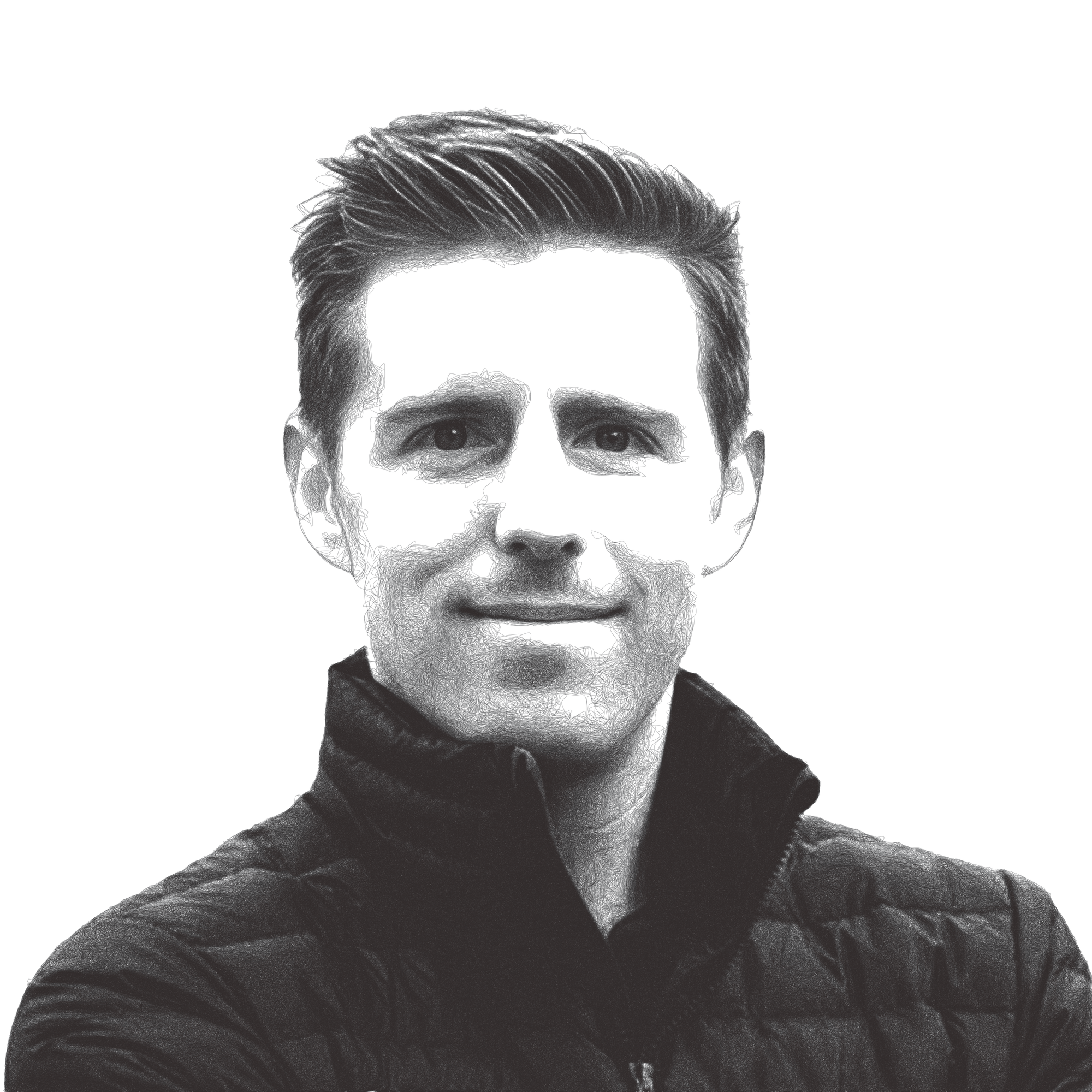
Mark Groden is the founder and CEO of Skyryse, a company building an operating system to make any aircraft easier and safer to fly.
Mark Groden is the founder and CEO of Skyryse, a company building an operating system to make any aircraft easier and safer to fly.
What led you to found Skyryse?
My story started as a teenager who was passionate about the utility of flight. I started learning how to fly and tragically my flight instructor was killed when I was in the early part of that process. Two generations beneath him were also lost on that aircraft. It was a loss of control in flight. They exited the flight envelope, stalled at low altitude, and that was it.
At that point, I started opening up the statistics and realized that the things causing significant levels of fatality inside aviation had nothing to do with the airframe. Number one was loss of control in flight, and number two was controlled flight into terrain. Both were things that higher levels of automation could address. The technology today can offer safer airplanes and helicopters. From that point, my life direction was set. For decades now, this has been my life's work and my passion.
Skyryse is on a mission to make flying every aircraft safe and simple, and is the only company to build truly aircraft-agnostic automation for both helicopters and airplanes. We believe aviation doesn’t need new aircraft to become safer, just modern technology applied in a smarter, more scalable way. SkyOS, the world’s first operating system for flight, replaces complex mechanical controls with an intelligent, integrated system that reduces pilot workload and enhances safety in all conditions, including emergencies.
We chose to start with helicopters instead of airplanes because it's a more complex application of automation technology. Helicopters are inherently more unstable than airplanes. For an automation technology to master a helicopter and offer the ease and simplicity of flying, we knew it was a superset of requirements on top of the airplane. Once you solve for challenges on a helicopter, you can more easily solve them for the airplane.
What I didn't appreciate when I started was just how hard this automation challenge is. It may seem that certifying a new airplane or helicopter is the most complex thing to do in aviation. It's actually not. The principles of flight and the physics of moving through the air have been unchanged for the better part of a century. Building and certifying a new airframe is actually simpler than coming up with a fundamentally new way to fly, especially one that captures the expertise and learnings of 100 years of flight, and then uses that to create a new human-machine interface inside the vehicle.
And because helicopters and airplanes are manned flying vehicles, our technology can never fail. Unlike other parts of aerospace, where maybe it's a rocket and you have the luxury of blowing up one out of every couple, we set out to develop aviation technology for vehicles that have people on board. So in the course of trying to redefine how people fly and make it safer and easier, we have to do so in a way that is fail-safe. That is incredibly difficult when you're trying to iterate on a new technology and a new product.
I've been doing this for a decade, and I still learn something new every single day. We're still learning, we're still improving, and it keeps me excited to tackle this challenge every day.
How significant is the safety problem in general aviation today?
General aviation is everything outside of commercial airliners. Within general aviation, there have been more than 10,000 accidents in the last 20 years in the United States. Literally every week, there's a fatal accident inside this category of aircraft.
Number one on the cause list is loss of control in flight. The pilot puts the wrong controls into the control sticks and it becomes an unrecoverable catastrophic outcome. Number two is controlled flight into terrain: flying a perfectly good flying machine into the side of a mountain. That's what happened to Kobe Bryant. He had one of the best pilots in the whole country with a $12 million helicopter. These problems are not reserved for the inexperienced or low-cost platforms. This goes all the way up to the highest-cost, most experienced pilots.
When you work your way down that list of top 10 causes, almost all are related to something the pilot could have prevented if they had taken different action. A lot of people conclude that the pilot must have not been well trained or not been very proficient. That's not the way to think about it.
When you look at what we're asking of pilots, it's almost impossible for anyone to fly these aircraft in a truly safe manner for a long period of time in all environments. First, the pilot can never make a mistake because they're one mistake away from death for them and everybody on board. Second, they have to be ready to react to these events literally instantaneously. If they do the wrong thing in that instant, it can be a domino effect and then it's game over.
What is the current state of automation in the cockpit and why does it fall short?
The reason why these outcomes are less prevalent in commercial airliners is, in part, because of the increased level of automation. Fly-by-wire, a digital system inside a Boeing or Airbus for example, gives the pilot a fail-safe. If they put the wrong control motion into the stick at any phase of flight, that computer system will protect them from exiting what is safe and inhibit that bad set of outcomes. That type of technology does not exist in any fashion in general aviation. That's part of what leads to all these catastrophic accidents. Those airliners are afforded some level of automation, but they certainly are not flying themselves. The human is the intermediary between all of the different systems on board the platform.
Our technology blends the best of automation and the best of human decision making—which isn’t always the case when we think about automation in aviation.
Take autopilot. You can think about autopilot in aircraft as a glorified cruise control. Once you set the speed, heading, and altitude, it will hold that. But if anything goes wrong with the platform, like you lose an engine or there's some other anomalous event, it immediately dumps the platform back on the pilot and co-pilot. We believe that's the wrong way to think about automation.
We learned this through autonomous cars. In the case of an emergency or anomaly, if the automation system dumps the machine back on the human, how does the human develop situational awareness in a fraction of a second to then do the right thing? They don't. We know that. We've learned that in multiple transportation industries. And yet still, aviation asks that of pilots. When autopilot systems turn off, you're left with a machine in its worst possible state, and then you're being asked to perform at a level higher than you've ever tried to perform as a pilot. That's why existing automation technology falls short.
Our technology, SkyOS, goes a step further. Automation in aviation must always function in the same fashion, regardless of what state the aircraft is in. We find it irresponsible to have degraded levels of automation and then have the human manage all these different modalities in the case of a failure. We just don't see that as the safest way to leverage technology. When flying with SkyOS, the human is still dictating where they want to fly. The human is the ultimate decision maker throughout all stages of flight—and with automation that’s always on, they’re afforded a more reliable means of safety and protection.
Workload is the other element that significantly contributes to accidents. Currently, in airplanes and helicopters, pilots have an abundance of systems they're constantly monitoring. Our system reduces pilot workload by automating even simple things like a hover. Our first production helicopter, Skyryse One, is the world's first inherently stable helicopter. That's a huge statement. This means that the pilot can focus on their task at hand, like where they want to fly, navigating, communicating with other aircraft and ground air traffic controllers, and monitoring weather—without having to constantly use their hands and feet just to maintain a stable hover.
Can you walk through what SkyOS is and how it works?
Our core technology is called SkyOS. It is the world’s first operating system for flight, and it’s applicable to any aircraft. As a blended hardware and software solution, SkyOS transforms existing airplanes or helicopters into fully digital platforms.
For all of the modern technology we have today, it might surprise you to realize that when you get into an airplane or helicopter, they are often flown through 1940s mechanical linkages that connect to the pilot in the cockpit. When the pilot manipulates the control, it goes down cables and pulleys to the flight control surface, no different than the handbrake on your bicycle. It’s incredibly outdated.
To have an operating system replace all those linkages, you need actuators to articulate the motion of the flight control surface. You need a computer to drive the actuators and human-machine interface in the cockpit that's fully digital. You need an abundance of sensors to tell the system where it is in space and how the vehicle is responding to control inputs. And you need management of all the other systems on board the aircraft, like the engine.
SkyOS is all of that. We designed and engineered the world's first triply redundant electromechanical actuator in-house because it didn't exist off the shelf. Same story for the flight control computer. If you go into an Airbus or Boeing, a flight control computer is as big as a whole room. We had to miniaturize that. Inside the cockpit we have touchscreens, a four-axis control stick, all the sensors, and 1.3 million lines of code that is our operating system. That bill of materials is entirely airframe agnostic.
We applied it first to the Robinson R66, the highest production volume trainer helicopter in the market. We started there because helicopters are harder than airplanes, and smaller and lighter helicopters are especially hard because there's no available weight, volume, or power, and very limited redundancy. Since then, we’ve spent the better part of a decade maturing our system.
Now we're applying the technology to other airframes. We recently flew a Black Hawk with SkyOS in just 91 days. From the day we started removing the mechanical parts and replacing them with SkyOS hardware to the day of our first flight was 91 days exactly. That’s unheard of in the industry. Typically those timelines are years, if not decades. With our system, we achieved the world's first automatic takeoff of a Black Hawk with a swipe of a finger. Swipe down, automatic landing. With a control stick that's four axes, you literally just point in whichever direction you want to fly and it flies. When you let go, it is inherently stable and will just sit there either in a hover or flying in whatever direction you last left it.
Why hasn't this been done before and what were the hardest challenges to overcome?
The industry is not incentivized to do something like this. The OEMs are system integrators. They don't even build autopilots or instruments inside the cockpit. They buy those components from sub-tier suppliers. Those sub-tier suppliers who could potentially build the necessary components are not interested in making hundreds of millions of dollars in investment to displace themselves as spare parts providers for existing airframes, which is where all their current margin is. Those businesses are all about selling spare parts at very high margins to existing aircraft. They're also very interested in supplying parts for the most expensive airframes like an F-35, where they can sell that same nonrecurring engineering at a much higher return on investment.
Part of what makes this possible is our business model. We're going to develop this technology and amortize that investment across the entire fleet, the entire category of aircraft. If you look at any other fly-by-wire platform, the investment in components is specific to that very platform. Those suppliers have to make back their investment on one platform, which is difficult at general aviation volumes.
The next piece is scope. There are entire publicly listed companies, who build and sell one component. One builds actuators, another builds flight control computers, another builds control sticks. Bringing all of it together under one roof, which is necessary to write an operating system, is just outside the scope of any of those companies.
Another reason this hasn’t been done before, is because of all the engineering problems you encounter when you set out to do something like this. So, from the start, we took on helicopters because they’re complicated to fly, and as we developed our technology, we then decided to tackle one of the most complex emergency situations—an engine-out landing (autorotation) in a helicopter.
Autorotations are some of the hardest maneuvers to execute in all of aviation, because if the engine fails in a helicopter, it's game over. In order to not fall out of the sky, you have to do a number of things very quickly and exactly right. You basically put the helicopter into a controlled free fall. Right before you hit the ground, you change the pitch of the rotor system to take that little bit of stored rotating energy and convert it to temporary downward thrust to cushion your landing. Get it right and it looks graceful. Do it too high and you cushion your landing only to then fall further. Do it late and you've already smashed into the ground.
About two years ago, we turned off the engine in the helicopter and performed the world's first engine-out, fully automated landing with our technology. We've since done it dozens of times where all the pilot had to do was choose where they wanted the aircraft to land.
There are concerns about pilot skill degradation when you automate too much in the cockpit. How do you think about this issue?
It’s a valid question, but I believe that concern is a reaction to aviation automation products produced with the wrong set of requirements, specifically automation that fails and then requires a human to jump in and save the day under the worst circumstances.
Automation can be powerful, but it should simplify, not complicate the experience of flying. If you have a machine with a conventional autopilot, it takes an hour just to explain all the different modes that autopilot could be in. When the autopilot kicks off, you have to surmise what state the machine is in very quickly and then do something smart about it. We fundamentally believe that is not the way automation should engage with humans in safety-critical environments.
Technology should enhance the experience of flying, the same way technology has enhanced the experience of driving. Think about ABS brakes. ABS brakes basically never fail because we've refined them and ensured a certain level of reliability. Professional drivers with ABS brakes don't practice using a car without ABS brakes. You can count on that safety feature to be available. That's how we think about this automation technology and it’s exactly how the commercial aviation industry is run.
Commercial airliners with digital fly-by-wire achieve 10-9 level of reliability, and that’s what our technology is built to. You've never heard of an airliner going down because the flight controls failed. It’s the same with our system. You can also think of an F-35, which already flies this way. The pilot is not trying to respond to every puff of air as they're flying past the speed of sound. They rely upon the computer to make that aircraft stable and safe at those airspeeds. Same here. You're pointing it, you're deciding the direction you're flying. And then because of that always-on, always-available, reliable automation, the human is able to focus on other elements.
When you apply this level of reliability and demand that the whole system must operate that way, you can empower the pilot, ensuring they're in charge of the aircraft at all times, with technology on their side. And, like ABS brakes, it's always going to work.
What is your vision for how this technology transforms aviation over the next decade?
Our technology is being scaled across every facet of the aviation industry. We have partnerships with the U.S. military, the largest air medical services provider, law enforcement agencies, private operators, the largest aerial firefighting entity, and international markets. What we've come to realize is that the solutions general aviation desperately needs are not confined to general aviation. Every single end-use case in aviation wants the safest, easiest-to-fly aircraft, whether it’s an airplane or helicopter. Safety is important to everyone, and especially pilots who are on critical missions.
Our near-term focus is getting this technology into the hands of operators as quickly as we can and scaling it into aircraft like the Black Hawk and other civilian machines, so pilots fighting fires and flying to save people, for example, are empowered with technology that lets them fly at a higher level of safety.
The next piece is this: general aviation today has about a one-in-seven pilot graduation rate. Six out of seven never finish pilot training. Most who start already have the passion. Most already looked at the cost and the time. So why do so few make it through? Because what most people quickly realize is that the aircraft they’re training and expected to fly with in the future, put them in situations where you're one mistake away from death.
If you can offer a technology that makes it easier and safer to fly, then those six out of seven people will continue. I believe in a future where people should get their pilot's license at the same time they get their driver’s license.
Our next steps are straightforward. Make the existing industry as safe as we possibly can, get the technology into the hands of the people who need it most, and then open up the sky so that more people can fly themselves places and get more opportunities in life.

Infinite Frontiers is made possible by HAUS, the leading public relations agency for deep tech startups and scaleups.