Investing in the physical layer with Deep33's Lior Prosor
Lior Prosor is the managing partner and co-founder of Deep33, a venture fund investing at the intersection of compute and energy infrastructure across the U.S.-Israel deep tech corridor.
Lior Prosor is the managing partner and co-founder of Deep33, a venture fund investing at the intersection of compute and energy infrastructure across the U.S.-Israel deep tech corridor.
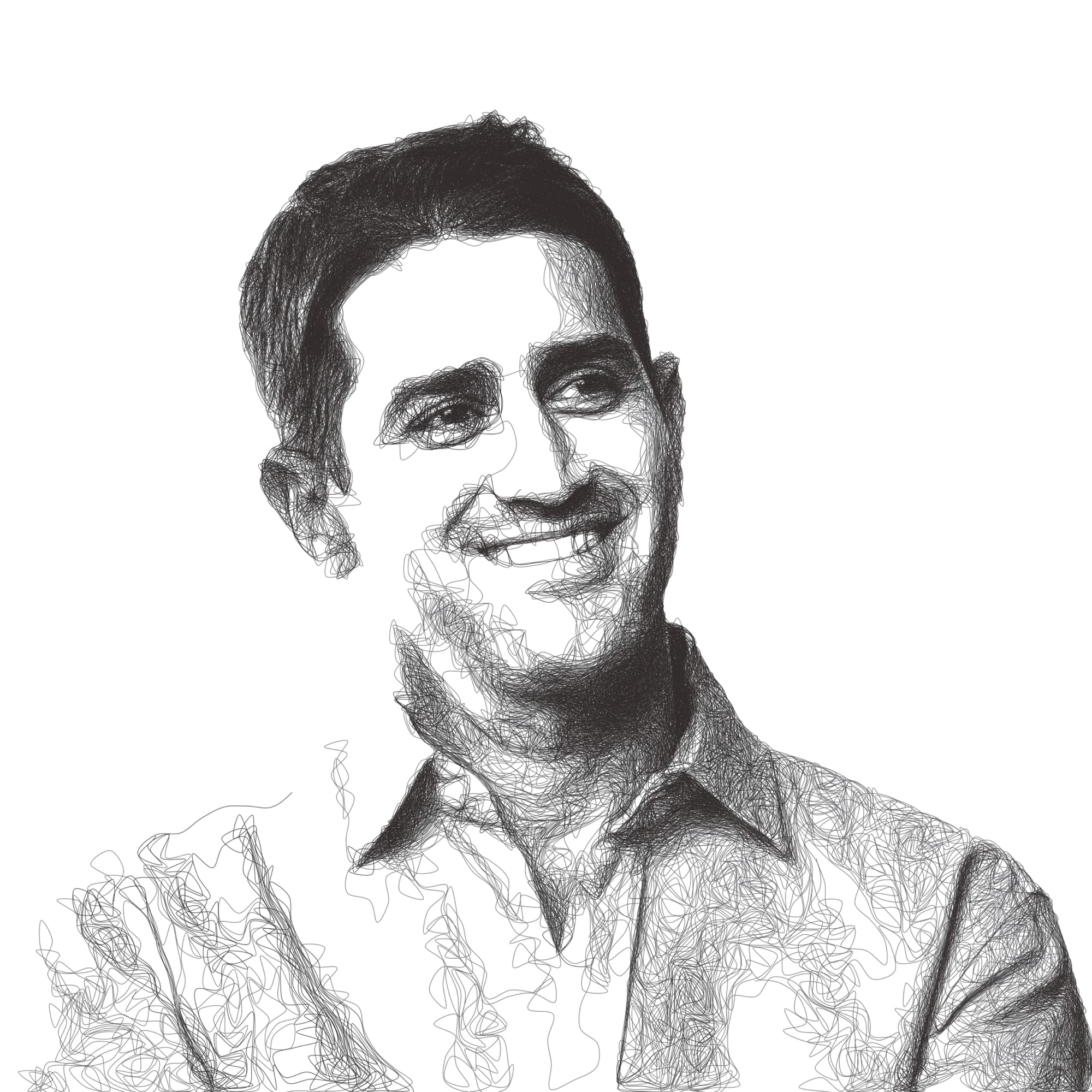
What's your background and how did you come to found Deep33?
I grew up a bit of a nomad. My father was a diplomat, so I bounced around from country to country growing up. Germany before the wall came down, London, and then high school in the Maryland area. I went back to Israel and served in the paratroopers for a little over five years as a combatant team leader and deputy platoon commander. From there I went into the only thing more difficult than infantry, which is investment banking. I started my career at Rothschild and then pretty serendipitously met the managing partner of Pitango, one of the legacy venture firms out of Israel. He took a liking to me and brought me on with no background in venture at all. That was my venture school.
From there I was recruited to work with a large single family office called Arkin Capital. The family had generated their wealth in pharma and life sciences and after a meaningful exit event wanted to expand into tech. My pitch was that there were a lot of second- and third-time Israeli founders in the U.S. with deep subject matter expertise, and it made sense to leverage the networks from back home to invest in those founders already here in New York and on the East Coast. So I moved my family over and that's what I did from 2013 until we set up Deep33. We were generalist in nature and made early investments in companies like Lemonade Insurance, Via Transportation, HoneyBook, and LendBuzz.
Then during 2024, for the first time and unintentionally, the companies that excited me just weren't generating deals in the old mold. The last two investments I made before founding Deep33 were into a foundational model company for brain-computer interfaces and a nuclear battery company building energy solutions for lunar missions, Pacific seabed sensors, and unmanned underwater vehicles. That was when I caught myself and realized there was something here that looked and felt different. The understanding of the science, the customer base being more government-oriented. That was the genesis of Deep33, and the last year has been about putting it all together in a much more structured way.
What is Deep33 and how is the team structured?
The core thesis is that in order to succeed in the areas we're focused on, which are the bottlenecks of compute and energy, you need to marry investment and operating expertise with domain expertise. When you break down compute and energy, that translates into quantum computing, advanced energy, and AI infrastructure.
On the investment side, it's myself and my co-GP Michael Broukhim, who went to Harvard undergrad and Stanford for grad school, then founded FabFitFun, the largest subscription box service in the U.S. As he likes to joke, after 12 years of satisfying millions of women around the world, the only thing left was quantum computing. But Mikey is an amazing operator and has become a prolific angel investor.
Then in each investment area, we have a partner who is a domain expert. Within quantum computing, we have a quantum physicist from the Weizmann Institute who is the deputy director of national intelligence in Israel. Our head of energy spent 8 years at EY's energy consulting unit, involved in deals spanning geothermal, solar, wind, and data centers. And our AI infrastructure lead is the woman who spent years operating at the highest levels within Israel's offensive cyber units, which at the scale it operates today is, other than the NSA, probably one of the largest AI infrastructure players globally.
The thinking is that each domain expert maintains a thesis around where the opportunity is, understands the science, and can navigate very different sourcing channels. The world of deep tech is no longer two undergrads from Stanford or MIT. Most founders are in their late 30s, 40s, and 50s with long academic, industry, or defense prime backgrounds. Navigating each of those ecosystems requires specialized knowledge.
This is our first fund with $150 million under management. We invest between seed and Series A, writing $3 million to $5 million checks at seed and $5 million to $10 million at Series A. We've been a co-lead in all five of our investments to date and our ideal consortium is ourselves alongside a deep-pocketed financial firm and a strategic partner.
Deep33 focuses on what you call the "allied infrastructure corridor" between the U.S. and Israel. Why is that geographic focus important?
The physical layer is going through massive disruption right now, and that's where capital is migrating. Money is moving away from software and into the physical layer, and that shift is driven by three things in the U.S. market.
First, the AI super cycle and the $500 billion-plus going into the ground for data centers. Second, for the first time since World War II, the U.S. is reshoring and reindustrializing, bringing all critical supply chains back home. And third, for the first time in a meaningful way, defense budgets are going not toward purely kinetic solutions but toward frontier tech. The DoD and DoE have their stamp on quantum computing projects, AI projects, and energy projects. Post-Golden Dome, that is even more pronounced as these technologies deploy in space. The U.S. is the elephant in the room with the multitrillion-dollar budgets.
The second derivative is that deep tech will not be distributed evenly. If you exclude China, which you have to geopolitically, and look globally, the ingredients you need to build a deep tech ecosystem are research and academic centers of excellence, a defense industry, a semiconductor industry, an optics industry, and an RF industry. That combination exists nowhere in the world other than Israel. Our view is that Israel will punch well above its weight in company creation. All these companies will build in the U.S. and establish their advanced manufacturing facilities here for U.S. customers.
The same way Israel has excelled in cybersecurity, we think the same thing will happen in these areas. The builder side is already heading there and now the policy side is coming to meet it. Pax Silica was just announced, with members of the Treasury and National Economic Council in Israel, to formalize a deep tech partnership spanning AI, quantum computing, and energy. We think that political alignment will enable a massive leap forward. So we want to be a big fish in small waters, which is the Israeli ecosystem, to support the massive opportunity in the U.S.
Where specifically within AI infrastructure are you focusing your investments?
We think the biggest bottlenecks in AI infrastructure revolve around memory and inference. On the memory side, if you have a billion ChatGPT users and each one of them wants 100 percent of their search history readily available for every next question they ask, that creates memory bottlenecks that have never existed before. Those need to be solved at the hardware and firmware levels.
The inference side is also compelling. There is a whole range of opportunities from dedicated hardware and custom ASICs for inference all the way to firmware and software solutions around efficiency. The question at this point in the AI cycle is less about whether it works and more about whether you can make it work at a price that justifies the investment. These are two areas that are far from being solved. We have advisory board members deep inside the AI labs, and memory and inference are repeated pain points you hear from every AI lab and hyperscaler.
What makes a company investable for Deep33?
From our point of investment, we need to see a path to the science being productized and bought by at least one customer within 24 months. That's the underwriting criteria. The chasm between "this works" and "now let's productize it and sell it to one customer" is exactly where we want to be investing.
We want to avoid what I would call science projects. The science itself needs to be proven and a full founding team needs to be in place. Two professors, no matter how smart and talented, are not enough for us to make an investment.
What advice would you give deep tech founders trying to raise capital?
The teams that have commercial DNA from day zero are the ones that stand out. And I don't just mean the technical team. What was often considered the third wheel of these founding teams, the commercial side, is actually critical. If you're tapping a problem that's big enough and important enough to hyperscalers, AI labs, or government organizations, you can secure NREs, pre-orders, non-dilutive capital, and even contingent purchase orders. Not every company is created equal. If you're building a fusion reactor, no one's going to buy that from you in year one. But there are so many deep tech companies that could be commercializing and simply aren't. It comes down to focus and finding that right subset of initial customers, which many times might be governmental.
How do you define deep tech?
Anything that has an order-of-magnitude change in impact on the end result. If you're able to do something at minimum 10x better or faster with a change of paradigm, that's deep tech. Usually it means tapping into innovation across physics, chemistry, and materials science. But it doesn't have to be.

Infinite Frontiers is made possible by HAUS, the leading public relations agency for deep tech startups and scaleups.