Upgrading Waste Into Value With Biofuel Evolution’s Jaymish Patel
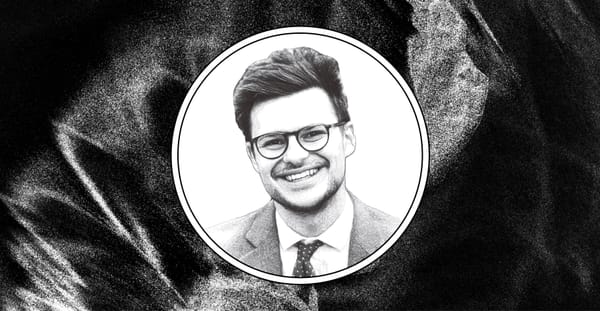
Jaymish Patel is the founder and CEO of Biofuel Evolution, a pre-seed startup combining data analytics and microbial strains to transform waste streams into valuable resources.
Jaymish Patel is the founder and CEO of Biofuel Evolution, a pre-seed startup combining data analytics and microbial strains to transform waste streams into valuable resources.

What led you to found Biofuel Evolution?
I’m an entrepreneurial innovator with a background in chemical process engineering. I pursued my undergraduate degree at Aston University and my master’s at University College London. During my studies at UCL, a coursemate and I started exploring ideas around food waste. We stumbled across the concept of converting food waste to ethanol using engineered strains, particularly Saccharomyces.
We entered the CleanTech Challenge, a pitch competition for students organized by UCL and the London Business School, received interesting feedback, and decided to pursue it full time after finishing our exams. That initial exploration led to partnerships with London South Bank University, Newcastle University, Kantar Advisory Partners and UCL. We’ve since secured several Innovate UK grants and completed the Science Creates Accelerator program, which enabled us to develop a small-scale prototype and demonstrate proof of concept to industry stakeholders.
How does Biofuel Evolution’s technology work?
We’re a pre-seed R&D startup that combines data analytics with what I call “magical microbes” to understand, degrade and valorize waste streams. Our initial focus was food waste, but after completing several Innovate U.K. projects, we’re now adapting our solution toward water and wastewater applications.
Water companies face major challenges with screenings, solids that are removed in the first step of the water treatment process. We’re developing a data analytics platform that reads waste stream compositions and understands how they vary across seasons. We then marry that intelligence with relevant biological pathways and microbial strains to identify optimal processes for valorizing and remediating those streams. We’re about to embark on a pilot project with Anglian Water Services that will kick off early next year.
How are these waste streams currently handled?
The main technologies are industrial aerobic biodegradation (composting) and anaerobic digestion (AD), which uses methanogenesis bacteria to produce biogas that’s upgraded into methane for the national grid. While gas is fundamental for the U.K.’s energy mix, AD has limitations, including degradation rates and residual effluents (digestates). The digestates contain pathogens, plastics and pollutants that get spread on land, interfering with biodiversity and eventually entering waterways.
Other technologies include incineration with heat recovery through combined heat and power systems, pyrolysis and thermal gasification that use high temperatures to break down carbon chains into bio-oils and gases. These thermal approaches can cause reactor clogging and require heavy maintenance. We believe biological systems offer the most natural way to deal with challenging waste streams.
What makes your biological approach unique?
We take inspiration from the human digestive system and our gut microbiome. Biological systems can adapt to challenging waste streams and residues that would otherwise persist in the environment for centuries. While other startups target aspects of these waste streams, many have come up short after multiple projects. They’re gravitating toward microbes for degradation, but we’re combining that with our analytics platform to understand waste compositions and reverse-engineer optimal pathways.
Our vision is to democratize sustainable energy and resources. My personal mission is to provide the world with access to sustainable energy through education, innovation and inspiration. If creating fuel output isn’t economically viable for our industry partners, we’ll pivot to focus on paths worth pursuing.
What’s your path from R&D to commercial scale?
Over the next six months, we need to prove there’s at least one viable waste stream we can target using our engineered microbes. Once validated in the lab, we’ll close our pre-seed funding round. The project will phase into different stages, with the next being a pilot trial in semi-operational conditions over six to 12 months. That pre-seed funding will help us meet those milestones.
Once we demonstrate scalability in more robust conditions, we’ll open our seed round to ramp up production. Our target market will be nation-specific within wastewater and the water sector, though we believe we can eventually iterate and tailor strains across different verticals using our analytics platform.
What’s the fundraising environment like for clean tech in the U.K.?
In a word: difficult. There’s significant hesitancy. If you’re not addressing a problem that industry faces daily, it’s very hard to entice anyone to back your vision. Without providing clear value to end users, it’s tough.
The U.K. government grant landscape is encouraging in some ways but needs better alignment with startups and scale-ups. There needs to be a stronger conduit between government, startups and investors. Opportunities are limited, and competitions are increasingly competitive. Smart grants have been scrapped. Once there’s more clarity, hopefully opportunities will improve this quarter and next year, though political uncertainty makes predictions difficult.
Clean tech has a reputational challenge from when the solar, wind, and battery bubble burst. But as the world gets smarter, there will be a different version and definition of clean tech. For me, innovation happens when invention meets market demand. What will entice stakeholders is whether there’s true demand for your solution addressing major challenges that industries and humanity faces everyday.
How do you define deep tech?
I think it’s how advanced technologies and science can address fundamental challenges that not only industry faces, but society faces, and how it can truly be a game changer for people and humankind.

HAUS specializes in public relations and creative services for deep tech startups.