Building Europe's First Semiconductor Fund with Cloudberry VC's René Kromhof
René Kromhof is a founding partner at Cloudberry VC, Europe's first venture capital firm dedicated to semiconductors, photonics, and advanced materials.
René Kromhof is a founding partner at Cloudberry VC, Europe's first venture capital firm dedicated to semiconductors, photonics, and advanced materials.
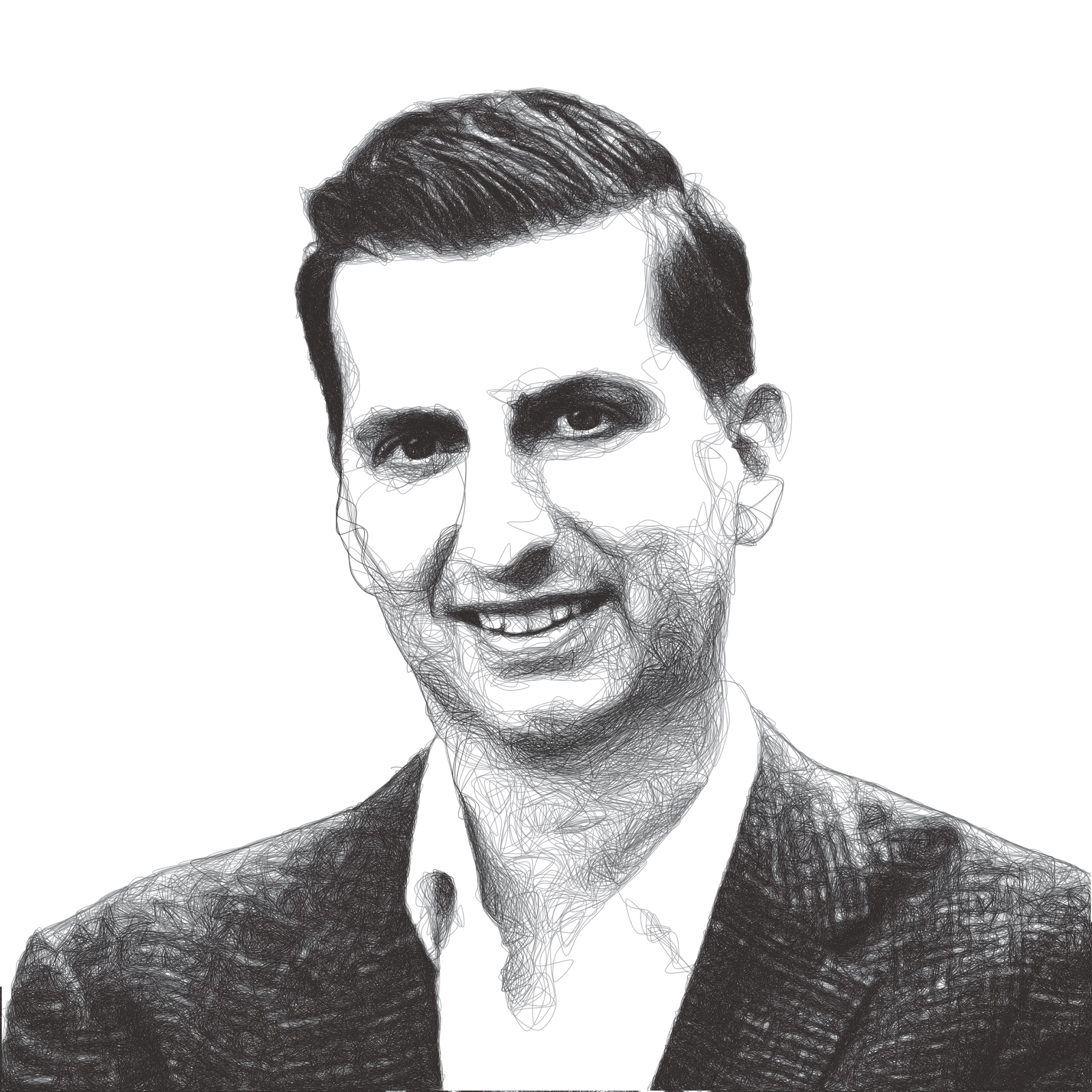
You spent two decades as a semiconductor operator before becoming an investor. How did you get here?
I'm an applied physicist by training, born and raised in the Netherlands. I started my working life in Eindhoven at ASML, where I spent some seven years. ASML is a semiconductor equipment company, and it's currently the most valuable company in Europe. That's the first hook worth sitting with. The most valuable company in Europe is a semiconductor company.
From there I moved to Switzerland to join Heptagon. Most people don't know the name, but our products are in their devices. We made optical sensors for consumer electronics, automotive, and industrial use. Think 3D sensors, heart rate sensors, proximity sensors, and ambient light sensors. That journey ran about 10 or 11 years. I joined when we were around 15 people, roughly at the A round. By the time we exited to ams, now ams OSRAM, we were 6,500 people globally with production in Singapore. The deal landed in the multi-billion dollar range.
I ran sales and marketing there, along with P&L and project management. It taught me how to scale hardware. I learned how the ecosystem works, how you develop IP, how you design for manufacturing, and how you negotiate contracts with the leading consumer companies of the world.
Then we got acquired, and after a decade I was ready for a break. We moved to Finland, where my wife is from. I started angel investing out of curiosity. I made 9 or 10 angel investments and have had 5 exits, most of them from the same domain. The latest was a Danish company called NIL Technology, a wafer-level diffractive meta-optics business that sold for around €300 million last year. I was an advisor to the CEO and sat on the board.
Angel investing taught me the fundamentals of how venture works in these technologies. But as an angel, you're still on the pushing side of the rope. After a few years that started to wane, and I was ready to do it in a more professional setting. That's when the idea of a dedicated semiconductor fund took shape. I had also been a venture partner in a deep tech fund in Finland, which is where I met my co-founder. We set up Cloudberry VC from there.
What is Cloudberry VC, and what does the fund invest in?
Cloudberry is Europe's first dedicated semiconductor VC. There's no one else, which is wild to be able to say. It's also alarming. Semiconductors are the biggest driver behind economic growth today. There's no independent private investor in Europe focused solely on this space. Deep tech funds do the occasional semiconductor deal, but not structurally.
We didn't start this because of the AI accelerator hype. We were already building Cloudberry VC before the AI wave hit, so the timing turned out to be a nice coincidence. Getting the fund running took about two years. We're at roughly €30 million now. We have a second close at the end of this month and a final close before the end of the year and momentum is strong. We invest at pre-seed and early stage, with check sizes from €400k to €1M, for which we take 5 to 15 percent ownership. We invest across Europe, including Switzerland and the UK.
The thesis has three pillars. The first is semiconductors. The second is photonics, which is anything related to light, including optics and optical systems. The third is advanced materials, but only where they connect to photonics and semiconductors.
When we say semiconductors, we mean the whole supply chain that goes into making chips. That can be equipment, design software, metrology,testing, and so forth. It sounds niche, but chip sales alone are a trillion-dollar market, and that excludes things like equipment. Photonics is just as big, also around a trillion dollars. People consistently underestimate it. Advanced materials add a few hundred billion more. So it sounds small, but it's one of the largest industries in the world.
Why has no one built a dedicated semiconductor fund in Europe before?
There are other investors in the space, but we're the only independent one focused solely on it. You have corporate VCs that invest with a strategic interest. There's no independent VC because it's such a different space. Growing these companies, assessing them, and doing due diligence all work differently.
I think the real reason is a lack of expertise at the VC level. I'm generalizing, but even deep tech funds in Europe are mostly run by generalists. They hire junior people with domain experience, which is good. It's rare to find a fund where the partners come from the industry itself. If you haven't lived it, how do you judge the IP? How do you assess the patents or the underlying technology? We now often see those kinds of VC’s reaching out to co-lead deals precisely because of our domain expertise.
Here's a related point. When people coach startups on pitching, they say don't talk about how you do it. Talk about market size and go-to-market and business models. We want the opposite. We want to know how you do it, because the underlying technology is the moat. That's the real thing that makes a company unique. It's a fundamentally different way of investing than backing a SaaS or AI software company.
What's interesting now is that the AI infrastructure boom has SaaS investors swarming into the space. That drives prices up, and the valuations don't always make sense. We're even starting to wonder whether some of it, like AI accelerators, is already too late. So we've started looking at the innovations happening around the edges of that.
Where do Europe's real strengths lie in semiconductors?
There's a serious amount of talent in Europe. At the invention level, about 20 percent of all semiconductor innovation originates here, measured by IP. Yet Europe holds only 6 percent of the marketshare. We have the talent. We just don't have the means to grow it and keep it here.
The EU Chips Act puts €43 billion toward sovereignty and building fabs, with a second one coming. I don't think building bleeding edge fabs is the way to go. If you want a bleeding-edge fab, €43 billion isn't enough. And we don't have the production ecosystem anyway. A TSMC fab isn't something you switch on and watch spit out wafers. It's decades of highly qualified skill that Taiwan, Korea, and the US built up. That ship has sailed for Europe. We can't independently build a 1.8-nanometer fab to compete with TSMC.
ASML is the better model. It found a niche and became extraordinarily good at it. That creates bottlenecks and interdependencies in the supply chain, which puts ASML, and therefore Europe, in a powerful position. The question is whether we can find more of those niches. Finland invented atomic layer deposition, which is now used widely across the industry. Can we find more like that? Compound semiconductors, power electronics, silicon carbide, and gallium nitride are all relevant to the electrification of everything.
I don't believe in sovereignty. The semiconductor supply chain is the most internationalized in the world. Nobody has all the pieces, and nobody is going to get all the pieces. That's a pursuit in vain. You just have to become very good at a few critical parts of the chain.
How do you approach early-stage investing in a field that moves this fast?
Honestly, it doesn't move that fast. AI is moving fast on the model and LLM side. Semiconductors are accelerating too, but the constraints are real. A new fab takes three years and tens of billions. You can't decide to make a chip and have it in production six months later. That's not how this works.
So investing in the hardware side of AI, the picks and shovels of the gold rush, gives you a kind of low band-pass filter. It's less noisy. You still have to do reliability testing and lifetime testing, and you still have to build out the supply chain. The fastest project I've done was about 18 months. The typical one is closer to three years, and genuinely novel technology can take five to seven.
These startups don't get cooked up in a garage in Menlo Park over a weekend. They come out of a lab or a university, where the technology has matured for four, six, sometimes eight years. So what do we underwrite at the early stage? The same things we would have three years ago. We look at the technology and the how, then we look at the team and the go-to-market like everyone else.
Did building this fund require unusually patient capital?
Yes, our LPs come from the domain. GlobalFoundries is one, and it's among the largest semiconductor foundries in the world. Radiant Opto-Electronics, a major Taiwanese photonics company, is another. That gives us a supply chain of capital that understands the dynamics. It also gives us access to fabs and engineering muscle when we want to dig deeper on a company. We have about 18 LPs, and more than half come from the industry. They can invest now because we're a dedicated fund. They could never back a generalist fund that does a food tech deal one day and a semiconductor deal the next.
But I want to push back on the premise. You hear everywhere that hardware is hard, expensive, and slow. That statement is wrong. In hardware you build something early that has a moat. That moat is IP, and it has value from day zero.
From an investor's point of view, you see two exit windows. The first comes at five to seven years, and it's an IP sale rather than a revenue multiple. The NIL Technology exit was exactly that. The second comes at 10 to 12 years, once you have IP plus production. Software doesn't have those windows. It just grows over time, and the tail is longer. Software companies often take longer to exit than hardware. There's good data on this in last year's Hello Tomorrow report.. Hardware exits are bigger by quite a margin. We fixate on the software valuations, the Lovables and OpenAIs of the world. In the trenches, though, the hardware exits win.
How exposed is your portfolio if the AI boom corrects?
There's so much riding on AI now that if it all washed out, we'd all suffer. But I believe we'd suffer less. The reason is simple. Data centers existed before AI. Processing is still the largest business for Google, Meta, and Amazon, and they'll keep using it.
If you look back to the 1950s and 1960s, the pattern is consistent. Give humankind processing power and it gets consumed. There's never been a moment where we said this computer is too fast. So I'm not worried. There might be a capacity adjustment, but the technology is still needed.
If anything, the AI wave has accelerated the infrastructure of data centers and pushed inference to the edge. Even if it cools off, those gains stick. So for hardware, a slowdown isn't really about who dies. It's about who ends up benefiting.
Now, is the buildout itself profitable? I'm not an economist but right now the buildout is not profitable. It costs around $60 billion to build 1 gigawatt of compute, and that generates roughly $10 billion in revenue. With a write-off of three to six years, you might pull $30 billion to $50 billion in revenue out of a $60 billion data center. Unless that revenue number climbs, there isn't a business in AI yet. Everyone watches tokens but this is the key underlying metric. Richard Windsor does a great newsletter on that which is worth following
You've said scaling a semiconductor company is fundamentally different. How?
Take software. Once you hit product-market fit, whatever that means, you pour money into your SDRs, BDRs, sales, and marketing. You put the pedal to the metal. That money either works beautifully or it's gone.
In hardware, the buildout is capex. It's equipment and manufacturing sites. And you never put tens or hundreds of millions into infrastructure without a customer commitment of some kind. On top of that, the equipment has intrinsic value. Once you install it, the residual value drops. But it isn't zero. That means the equipment can become collateral.You can finance part of it with non-dilutive funding.
So even when you go pedal to the metal in hardware, it's actually less risky. You don't do the buildout without a customer commitment. I'd argue the scaling risk in hardware is lower than in software. With software, if you misjudge it, the money is simply gone and the write off materialises.
What makes a good founder for Cloudberry VC?
A few things. I don't worry much about technology readiness level. We can take high-risk bets and back ideas if we need to. As I said, most of it already exists in some form in a lab. If the TRL is too high, it's probably too mature for us. We sit on the early, risky end.
What we look at is the IP first, then the team, like every VC. The difference is what I'd call a commercial mindset. In our domains you mostly get PhDs, deeply technical people who have to make the switch from developing the technology to running a business. You want to see whether they can make that leap.
But it's a mistake to step in too early and say they need a commercial CEO. If the thing is still sitting in a lab, it isn't sellable yet. You bring in a commercial person, and there's nothing to sell yet. They end up living in PowerPoint. The people you do sell to at that stage are engineers, not procurement. You're talking to other deeply technical people.
So a technical CEO can be the best CEO you can have early on. They can both nerd out in the meeting. What matters more is whether they'll jump on a plane from Helsinki to San Francisco to meet someone in person. That tells me more than whether they've hired a sales guy.
We see two kinds of founders now. Some come straight out of the hardcore research labs. Others have done their time at the Nvidias and Metas of the world, and that group is more recent. I think it's an AI effect. They see that there's money to be had. The risk feels lower, because an ex-Nvidia title helps them raise. But most of the time, it's still the technical people.
How do you define deep tech?
I'll give you the boring answer. Deep tech is something protected by strong IP. It should be science-based or come out of a university. But fundamentally, it comes down to IP. That's what we love about it. The term gets used in wildly different ways, and honestly it's misused. I know SaaS investors who call themselves deep tech. For some of them it's fair. For others, it's a stretch.

Infinite Frontiers is made possible by HAUS, the leading public relations agency for deep tech startups and scaleups