DTN 173: Montana pushes frontier of experimental medicine
Plus: Zoox clears hurdle to launch paid robotaxi service, Antares raises $470M, US bans foreign-made humanoids, Intel debuts chip for space computing, an open source AI alliance, electronic noses, and more.

“The biggest mistake I see with founders is around communication. It's not easy to explain complex technology in a way that evaluators with a technical background will understand. Companies get so entrenched in their own business that they lack the distance to communicate it clearly.”

Montana’s plan to become an experimental medical hub just pushed forward
“As of this week in Montana, any biotech company with an experimental drug has a clear path to selling it to consumers. Companies whose drugs have been through preliminary testing—sometimes in as few as 10 healthy people—can pay $12,500 to apply to a newly established review board for approval. Once its treatment is rubber-stamped, the company can set the price of the drug and sell it via experimental treatment clinics, the first of which is likely to be up and running around the end of this year.
Montana’s latest right-to-try legislation is unique. While other jurisdictions with similar laws limit access to drugs to people with terminal illness, in Montana access is theoretically available to anyone who gives informed consent and can pay. That includes people desperate for treatments for rare diseases. It also includes those who are interested in longevity and want to try out drugs pitched as preventive therapies.” (via MIT Technology Review)

- AI and quantum computers will be frenemies
- Zoox clears final federal hurdle to launch paid robotaxi service
- How an overlooked geothermal plant got a second chance
- Montana's plan to become an experimental medical hub just pushed forward
- Are brain waves the next unlock for physical AI?
- US bans foreign-made humanoid robots, targeting China over national security
- The quest to keep organs alive outside the body
- How lasers could help provide fuel for nuclear reactors
- FAA seeks to ease environmental reviews for commercial space launches
- Intel debuts new chip for space computing
- More than 30 companies form open-source AI alliance

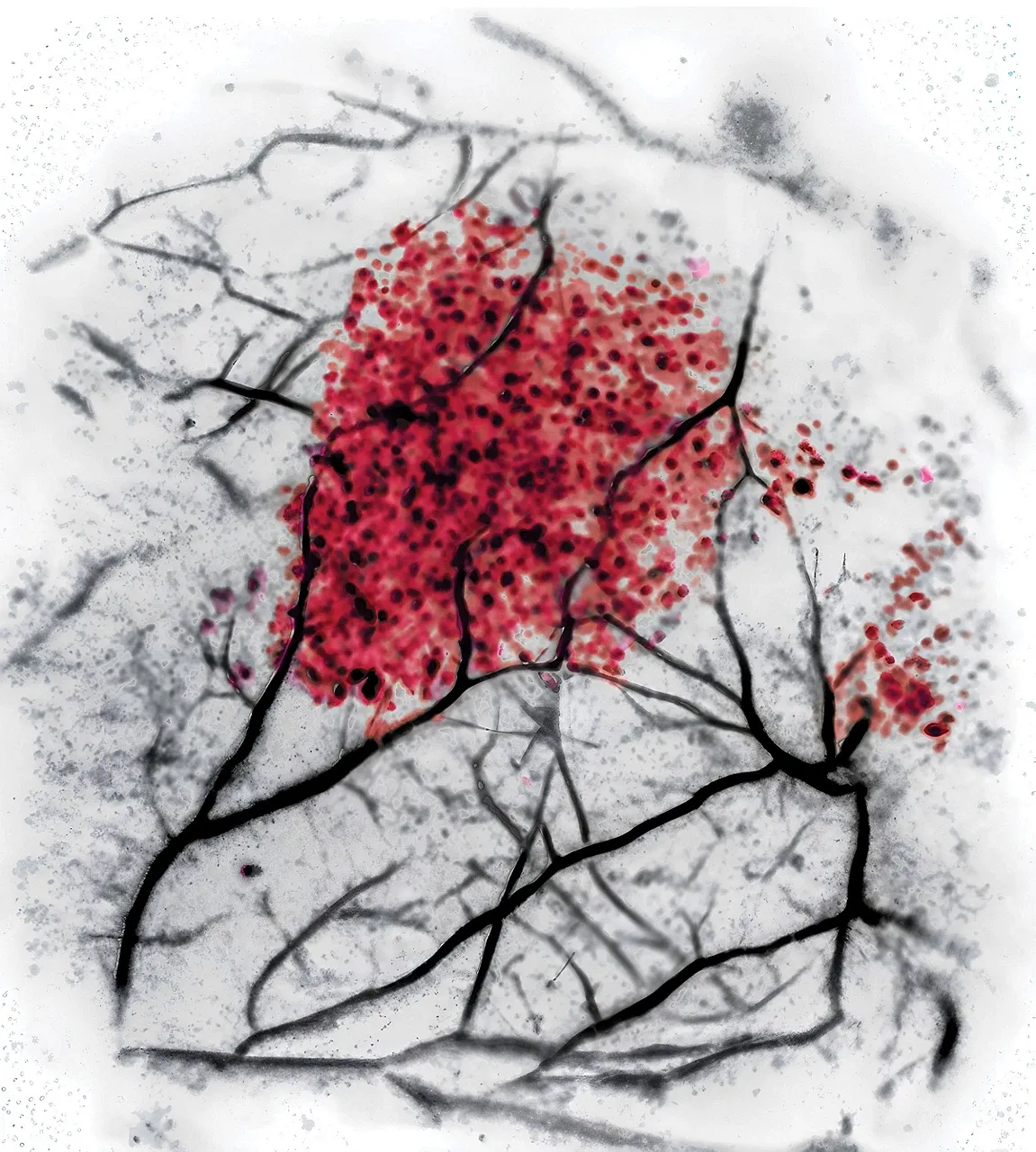
“Most techniques for detecting microplastics in tissue either destroy the tissue or depend on the lifetime of radioactive or fluorescent labels, making them difficult to do outside specialized contexts, says P. Stephen Patrick, a lecturer in medical imaging at University College London.
Patrick and his colleagues relied instead on the inherent absorbance differences between plastic and mammalian tissues. By shooting a pulsed laser at tissue and measuring high-frequency sound waves emitted in response, the researchers found they could map the location of pigment molecules found in plastic but not naturally in the bodies of living creatures. They tested the method by injecting microplastics from ground-up pen lids into mice. This image was taken 1 h after injection, but the plastics were still detectable 3 months later, Patrick says.” (via C&EN)

- New microwave neural network method could compress and secure wireless communications
- Large Bioprinted Tissues Get a Precision Boost
- Tiny memory switches could shrink 5G and 6G radio-frequency chips
- 3D-printable material can heal the body, build better robots and recover critical minerals
- Waste-based geopolymer mortar offers greener, fire‑resistant alternative to conventional concrete
- Insect-inspired electronic nose: Turning semiconductor chips into olfactory sensors
- Brain-inspired AI is capable of flexible planning and problem-solving while using far less energy
- Transplanted testicular tissue grew sperm in an infertile patient

- Shield AI raises $1.5B Series G for AI pilot software powering autonomous military aircraft
- Commonwealth Fusion Systems raises $1B for compact tokamak reactor using high-temperature superconducting magnets
- Multiverse Computing raises $570M Series C for quantum-physics-based LLM compression
- Antora Energy raises $550M Series C for thermal batteries storing electricity as heat for industry and data centers
- K2 Space raises $500M Series D for large high-power satellite manufacturing
- Antares raises $470M Series C for small modular reactors for US military bases
- Eliyan raises $145M Series C for electro-optical chiplet interconnects powering AI data centers
- Enigma raises $71M seed for intuitive human-robot interaction interfaces and foundational AI models
- ChipAgents raises $60M Series A2 for AI agents that automate semiconductor design and verification
- Claros Technologies raises $55M Series B for UV-based destruction of PFAS "forever chemicals"
- World raises $52.5M via crypto sale for iris-scanning proof-of-human verification
- Fish Audio raises $52M seed for real-time text-to-speech, voice cloning, and voice agents
- Lydian raises $43M Series A for modular synthetic aviation fuel from CO₂ and hydrogen
- Agon raises $30M pre-seed and seed for synthetic battlefield infrastructure to train autonomous weapons AI
- Greyparrot raises $27M Series B for AI cameras that identify waste materials on recycling sorting belts
- ZuriQ raises $25.5M seed for 2D trapped-ion quantum processors
- CORE Biomedicine raises $21M Series A for lineage-based cancer therapies targeting tumor cell identity
- Array Labs raises $21M for coordinated radar satellite constellations tracking terrain and activity
- Qureight raises $20M Series B for AI-powered imaging precision endpoints in lung and heart clinical trials
- Nuclear Turbines raises £15M for compact reactors using jet-engine turbines instead of steam
- Andrenam raises $18M Series A for AI-powered underwater acoustic sensing and vessel tracking
- Vivid Dx raises $15M seed for AI-powered Raman spectroscopy sepsis blood diagnostics
- Throne Science raises $10M Series A for AI toilet sensor tracking gut health and hydration
- Adjuvia Therapeutics raises $8M seed for oral therapies repairing mitochondrial damage in rare diseases
- Outlier Space raises $7.35M pre-seed for reusable reentry capsules targeting microgravity research customers
- Perceptron raises $6.5M Strategic for commissioning AI training datasets via decentralized node network
- Dopl Technologies raises $6.3M Seed for remotely operated robotic ultrasound exams
- Aurenar raises $5.7M Seed for single-use vagus nerve stimulation to reduce ICU inflammation
- Navi Medical Technologies raises $A6.8M for ECG-guided catheter placement in neonatal and pediatric care

Some robotaxis approved to operate without steering wheels and losing the brake pedal could be next / LinkedIn adds a button to report AI-generated 'slop' / A.I. companies are recruiting electricians and carpenters by the thousands / Why is everyone trying to build a solid-state battery? / A Civilian Plane Crashed in New Mexico. Was the Military's Tech to Blame? / The Hiroshima atomic blast created a never-before-seen material / How DARPA plans to get nuclear power in the size of a 'AA battery' / Airpower opened Iran's skies. Why hasn't it reopened Hormuz? / The robot NASA hired to lift a orbital telescope is tumbling out of control / Sam Altman is ready to decelerate / Silicon Valley Is Completely Divided Over Chinese AI / Boomers Can't Stop Gifting Their Grandkids AI-Generated Slop Books / Fusion is ready. Is Trump's Washington? / Leaked document reveals White House nuclear waste plan / Data center boom sparks lobbying surge / Can we stop AI from flooding scientific journals? / The future of gray-market peptides