DTN 178: Fermi Explorer plots interstellar mission
Plus: Hermeus taps Anduril for Quarterhorse atuonomy, Google buys 400MW of geothermal from Fervo, utilities race to link up with fusion startups, why the Army is deploying nuclear reactors on US bases, how AI is reshaping chemical sciences, and more.
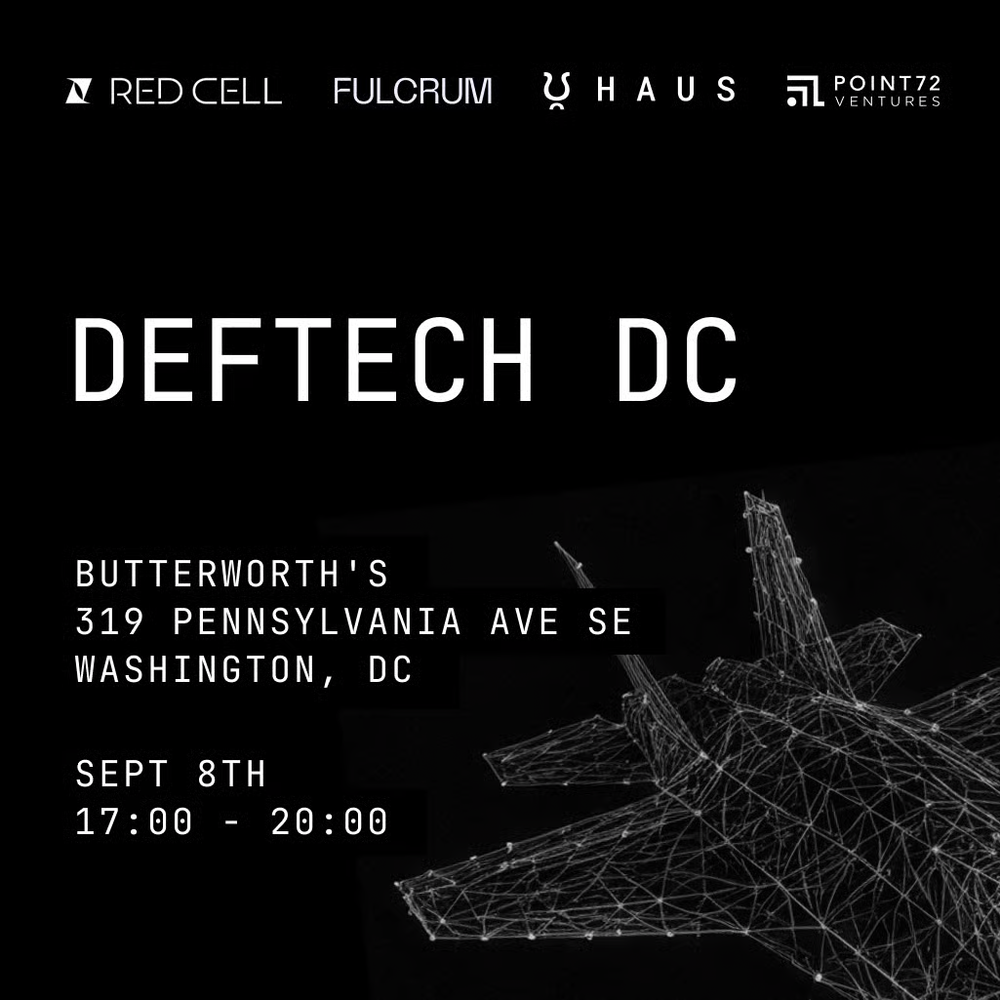
We're throwing a party at DC Deep Tech week!
Join HAUS and our friends Red Cell Partners, Fulcrum Venture Group, and Point72 Ventures for an evening of networking and drinks with leading investors, founders, and operators in the national security and defense tech ecosystems as part of DC Deep Tech Week.


“Right now, it's still very difficult to buy a satellite. I'm a millennial. I buy my groceries online. Purchasing a satellite should be like buying a car or a laptop computer online.”

How AI plotted an interstellar journey to Alpha Centauri
“A nonprofit organization called the Fermi Explorer Mission announced today that it intends to launch a spacecraft to our nearest star system by the end of 2029.
It’s a hugely ambitious mission—if all goes well, the spacecraft could take up to 80,000 years to arrive at Alpha Centauri, which is 4.4 light-years away. And the spacecraft will follow a novel trajectory discovered by an AI system developed by Physical Superintelligence (PSI), an AI physics research lab. PSI is launching today with $58 million in funding led by Breakthrough Energy, a climate-focused investment group founded by Microsoft cofounder Bill Gates.
It’s not the first time this has been tried. In 2016, the billionaire tech investor Yuri Milner announced an interstellar mission called Breakthrough Starshot to launch humanity’s first spacecraft to Alpha Centauri. The plan was to use powerful lasers that would propel tiny probes to a fifth of the speed of light—fast enough to reach Alpha Centauri within 20 years. Milner pledged $100 million toward a proof of concept. But a decade later, nothing has launched.
“We didn’t want to do another Breakthrough Starshot,” says Philip Johnston, the cofounder and president of the Fermi Explorer Mission. “We’re dead set on something actually launching.” (via MIT Technology Review)

- Seattle scientists launch $95 million AI biology effort
- Hermeus picks Anduril autonomy for Quarterhorse drone
- Enhanced geothermal notches another win as Google buys 400 MW from Fervo
- How engineered microbes could help feed the world's crops
- Military uses AV directed-energy system to 'defeat' drones at the border

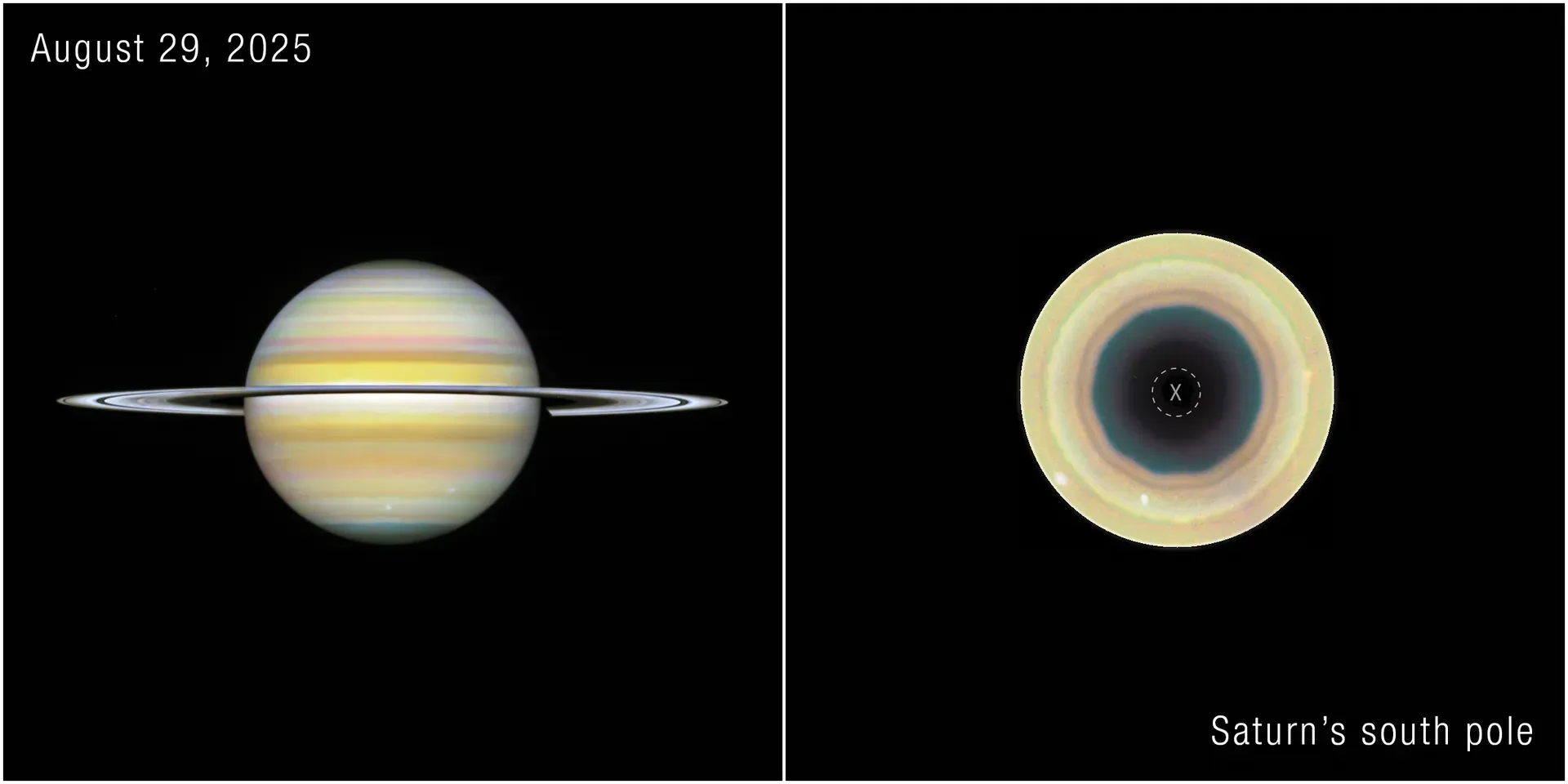
“A team of astronomers discovered a strange polygonal atmospheric structure on Saturn near the planet’s south pole. This 10-sided shape, known as a decagon, joins one of the gas giant’s most famous features: a hexagon near the north pole that was first observed 44 years ago. Images of the new decagon were captured by the Hubble Space Telescope, and the discovery was recently published in the journal Science Advances.
The formations at both the north and south poles aren’t solid structures, like a wall or a rock formation. Saturn doesn’t even have a defined solid surface like Earth’s crust. If you were to descend through the atmosphere of the ringed planet, the pressure and density would progressively increase, but you would never reach a “ground” on which to land. Instead, what astronomers have witnessed are patterns formed by clouds, albeit very unusual ones.
Each side of the decagon measures approximately 16,800 kilometers, which is a few thousand miles longer than the diameter of Earth. Near the feature is a jet stream reaching speeds of 116 meters per second, or nearly 260 miles per hour. By way of comparison, a Category 5 hurricane—the most intense storm level possible on Earth—is defined by winds above 157 miles per hour. Interestingly, although the jet stream circulates at tremendous speed, the decagon pattern shifts at a mere 2.5 meters per second—less than 6 miles per hour. (via WIRED)

- Transparent silicon-photonics chips could bring advanced optical systems to curved displays
- Light-driven reaction overrides a 60-year-old rule of synthetic chemistry
- New nanostructure makes non-linear light conversion 72,000 times more efficient
- New transistor brings high voltage to microchip scale
- Giving solid-state batteries a squeeze keeps them from short-circuiting
- Quantum-tunneling field-effect transistor overcomes barriers to integrated-circuit chip development
- Self-cleaning ocean carbon capture device removes mineral buildup while extracting CO₂
- CO₂ recovery method could unlock 137 billion barrels of U.S. oil reserves, says report
- World's biggest dark matter detector spots a single weird particle
- This company designed a drug candidate with help from ChatGPT and Gemini

- Crusoe raises $3B for hyperscale AI data center campuses and cloud infrastructure
- Tripo AI raises $445M Series B for a 3D-native foundation model platform for generative 3D assets
- Lyte raises $165M Series C for sensing and perception silicon and AI software for robots
- iPronics raises $125M Series B for silicon photonics optical circuit switching for AI data centers
- Superluminal Medicines raises $60M Series B for AI-driven small-molecule GPCR-targeted drug discovery
- Physical Superintelligence raises $58M seed for an AI-native physics platform using virtual physicists
- Typewriter Therapeutics raises $56M Series A for an RNA-based gene writing platform for in vivo CAR T and liver diseases
- Elucid raises $55M Series D for AI-powered precision diagnosis and treatment of cardiovascular disease
- HyImpulse raises €50M Series A extension for hybrid propulsion suborbital and orbital launch vehicles
- Aptera raises $44M for a solar electric vehicle production partnership
- Locus Robotics raises $41.6M Series G for autonomous mobile robots optimizing warehouse order fulfillment
- Aitan raises $41M for edge-AI robotic weapon systems for allied militaries
- Wafer raises $40M Series A for AI inference chips and unified software serving infrastructure
- Reframe Systems raises $40M for robotics-driven microfactory home construction
- N-Power Medicine raises $32M Series B for oncology clinical trials using prospective external control arms
- NovaGo Therapeutics raises $30M Series B for anti-Nogo-A biologics promoting nerve regeneration in CNS diseases
- Gridsight raises $26M Series B for an AI-powered grid capacity management platform for utilities
- Inleap Photonics raises €20M seed for ultra-fast laser beam steering systems for drone defence
- Empirik raises $21M seed for AI that predicts and prevents infrastructure outages
- iPremom raises €15M seed for a molecular diagnostics platform predicting severe pregnancy complications in first trimester
- Norbert Health raises $14M Series A for a physical AI control system turning robots into autonomous nursing assistants
- Critical Materials Group raises $10.3M seed for modular automated U.S. military explosives production
- Diffraqtion raises $10M+ pre-seed for quantum imaging cameras that see farther with smaller optics
- Amyl Therapeutics raises €8.25M Series A extension for multi-amyloid immunotherapy targeting neurodegenerative diseases
- Newlight raises $9M seed for hydrogen-injection retrofit systems reducing cargo ship emissions
- Kepler Aerospace raises $8M seed for autonomous multi-satellite swarms for defense
- Helogen raises $7.1M seed for robotic in-orbit fabrication of advanced biomaterials for medical implants
- Senticell raises $7M seed for RBC-bound nucleic acid liquid biopsy in oncology
- Airbility raises $4.7M Series A for AI-powered eVTOL systems that physically defeat hostile drones

Inside Colombia's Cocaine Factories / Utilities are racing to link up with fusion startups, with Realta Fusion the latest to benefit / Why the Army wants to deploy nuclear microreactors on US bases / Dutch central bank moves 86 tonnes of gold from US citing 'geopolitical unrest' / Florida and Texas move to block Flock cameras over privacy concerns / The Cybercab Is Almost Here. Now Comes the Hard Part / Is It Even Possible to Understand Quantum Mechanics? / Flavorists are recreating smoke to save Europe's snacks / STAT+: ARPA-H funds biotechs working on custom RNA therapies / Physics AI is different and changes the way defense systems are designed / MapQuest's app surges to No. 1 in Navigation after refusing to rename Lake Ontario / Does Computer Science Need Computers? / Inside Meta's Push to Put Robots to Work in Data Centers / Mathematician discovers how to fold the smallest origami doughnut / How AI is quietly reshaping chemical sciences / ARPA-H awards $125M for manufacturing custom RNA therapies on demand / Roman Space Telescope Begins Its Journey to L2 / The US military gets its own ChatGPT today