Backing the Sci-Fi Future with Boost VC's Adam Draper
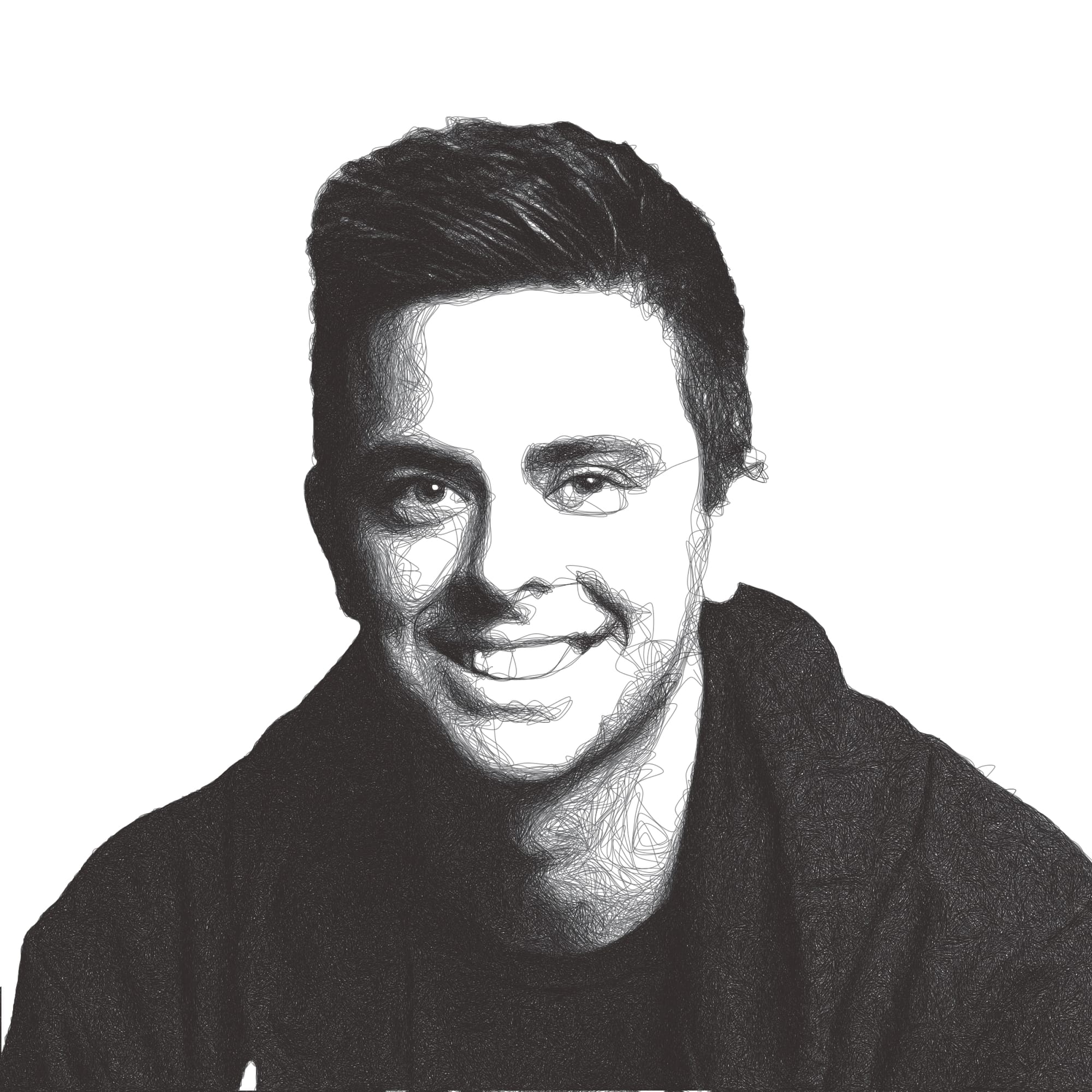
Adam Draper is the founder and managing director of Boost VC, a pre-seed venture capital firm that writes first checks for deep tech startups across crypto, space, biotech, robotics, and AI.
Adam Draper is the founder and managing director of Boost VC, a pre-seed venture capital firm that writes first checks for deep tech startups across crypto, space, biotech, robotics, and AI.
How did you get into venture capital?
There are two ways I got into this. The first is the logical progression of building a career. I went to boarding school at Andover, took a year off to play tennis in Australia, and then went to UCLA. In my senior year, I started a company with Thomas Foley called Xpert Financial, a secondary market for private securities. That was a novel idea back around 2008 during the liquidity crisis, when the assumption was that you held if you were a VC. We ran it for about four and a half years and eventually sold it for parts.
Around that time I made my first angel investment. I met Shawn Fanning, who founded Napster, while he was starting Path with Dave Morin, and that became my first check. After that I launched a crowdfunding site called Boost Funder, and I realized it was never really about crowdfunding. Everyone wanted a first check. My partner Brayton Williams and I had raised about $500,000, so we decided to turn it into an accelerator. We dropped the "Funder," and that was the beginning of Boost. What I love is giving people a shot, and we go wherever we can be most useful. That is usually an emerging category people are afraid of for some specific reason. Crypto was taboo. American dynamism looked like too much capex. New bio scared people because they assumed they couldn't understand it.
The other way I got here is that I am a fourth-generation venture capitalist. My great-grandfather was the first VC at a fund called Draper, Gaither & Anderson. My grandfather co-founded Sutter Hill Ventures, and my dad started DFJ. I always say my great-grandfather founded venture, my grandfather institutionalized it, and my dad took it global. I still have breakfast with my grandpa every two weeks. The main thing is that our family just really enjoys giving people a shot. It is a very patient game, not an immediate gratification. But it is a lot of fun.
What is Boost VC's investment approach?
Boost VC writes pre-seed first checks into what most people would call deep tech. We invest $500,000 today, and we do high volume. That is about 80 deals a year, or roughly one and a half a week. Internally, we still call it sci-fi tech. Our mission is to accelerate the sci-fi future, and whatever gets us there works for us. I once had a thesis that it was anything that gets me closer to an Iron Man suit. Right now it is closer to anything that gets us closer to mutants.
In venture you have two kinds of relationships. The startup is the customer, and the limited partner is the shareholder. Limited partners generally want a bucket to put the investment in, and we were fortunate that deep tech emerged as a bucket. We were already doing deep tech before anyone called it that. Other funds might call it hard tech or American dynamism. To the founder, though, the label matters less than the imagination. We want them to believe they are not crazy.
Why frame what you do as "sci-fi tech"?
Saying sci-fi tech is our way of telling founders that if they have a big idea other people think is a little crazy, we would love to look. It signals a wide breadth of acceptance. Your friends and family might think you are crazy, and we won't. The craziest ideas are often the best, and they are normally taboo for some specific reason.
A big piece of it is also my comic book obsession. I have read comics my entire life. I am on the board of Skybound, which owns the rights to The Walking Dead and Invincible. I even worked as a telemarketer for a comic book company called BOOM! Studios in college. A lot of great ideas come from science fiction and fantasy, and that lets me accept the truth of whatever a founder is saying faster. Honestly, I think it is an edge.
When a deal hits your desk, how do you build conviction?
My grandpa always says this is a people business, and if you are good with people, you will do pretty well. I believe that more today than ever. The idea can evolve. I don't think Elon was thinking about Starlink when he started SpaceX. So you are really assessing the humans.
My grandpa's rubric is close to ours. It comes down to energy, integrity, and intelligence. Those are the three factors that drive the agency to build a startup. We also look for what someone once called spiky, where a founder is extremely intelligent, or extremely good with people, or extremely operationally savvy. You want to find their core competence and ask whether it is five times better than anyone else you have ever met. That tends to breed the internal confidence to build something big.
I believe great people choose great missions. By choosing an insane mission, they put themselves in a different category. If they walk through our door, they need to be thinking this could reach 8 billion people. What often happens is the idea has no market risk. If you are building a nuclear reactor, there is a market for energy. If you have a cancer cure, there is a buyer for it. So the question becomes whether the founder has a real chance at making the thing. If the odds are decent because the person is exceptional, we should do it.
The thing that gets more true every year is that you want to work with people you admire and can trust immediately. There are more opportunities now to make money on a transactional basis, and maybe that is where the business is going. I believe the outlier hits will always come from high trust and high partnership. We built Boost VC so we always have a shot at finding amazing people we want to work with for our whole careers.
Which areas of deep tech are overinvested or underinvested right now?
My obsession is finding the blind spot, the place where no one is looking. By definition that is not obvious. Over the last five years, high-capex businesses have become very popular. New administrations played a part. But I think this was coming regardless, because we naturally wanted to onshore more of what we build.
The aerospace and American dynamism world is not overvalued, but it is probably fairly valued. Because of SpaceX and a lot of other great movements, it is harder to find an early-stage startup doing something truly novel there. You see a lot of founders starting the same type of company, which usually means we are slicing smaller opportunities rather than building the major one. It is still a fantastic place to build, because people have to think huge. If we are going to live on Mars, someone has to figure out how to farm and communicate there.
My hot take on what is undervalued is that biotech is deep tech. It deals with atoms and software, and I think it is the most undervalued category right now. It is finally coming into the spotlight because of AI and the realization that we can all sequence our genome. We have been investing in that space for about three years. It also scratches a real itch, because it is hard to debate that curing cancer or solving autoimmune disease would be a big deal. I actually think people underestimate how significant the market of staying healthy is. That is the big one.
Looking back, what investments best validate your philosophy of backing the "sci-fi future"?
The simplest answer is pattern recognition. Before starting Boost, I was angel investing, and five of my first 25 angel investments became billion-dollar companies, including Coinbase, Amplitude, and Benchling. What they had in common wasn't the exact idea—it was exceptional founders pursuing opportunities that many people initially dismissed or didn't fully understand.
At Boost, we've tried to institutionalize that mindset. We've been fortunate to back companies like Radiant, K2 Space, and Colossal at the earliest stages. We have $350m in AUM, but the lesson is the same as it was with my early angel investing: the best founders are often working on ideas that sound a little crazy at first. If everyone already agrees it's a great idea, you're probably too late. Our job is to recognize the people and missions that will seem obvious in hindsight, long before they become consensus.
How do you define deep tech?
My definition has always been that deep tech is where atoms and bits collide. It is the point where the software becomes the edge that lets you develop the hardware. Right now that shows up as aerospace or American dynamism, and biotech is the version of it that is still undervalued. You can think of robots, new-age steel mills, and manufacturing as the same idea, atoms and bits colliding to make a modern company.
The funniest version of the answer is that deep tech is like the old line about obscenity. You know it when you see it. I was at a dinner with 20 VCs recently, and everyone had a slightly different definition. But we are all circling the same thing. I think technology is anything that saves you time or delivers you certainty. I care about the output, not the input. I don't care what a founder uses in the middle. If there is a better way to merge bits and atoms, I want it.

Infinite Frontiers is made possible by HAUS, the leading public relations agency for deep tech startups and scaleups