Reindustrialization, Robotics, and the Lunar Economy with Beyond Earth Ventures' Viktor Shpakovsky
Viktor Shpakovsky is an investment partner at Beyond Earth Ventures, a $30 million venture capital fund investing in transformative deep tech across space tech, robotics, energy, and compute.
Viktor Shpakovsky is an investment partner at Beyond Earth Ventures, a $30 million venture capital fund investing in transformative deep tech across space tech, robotics, energy, and compute.
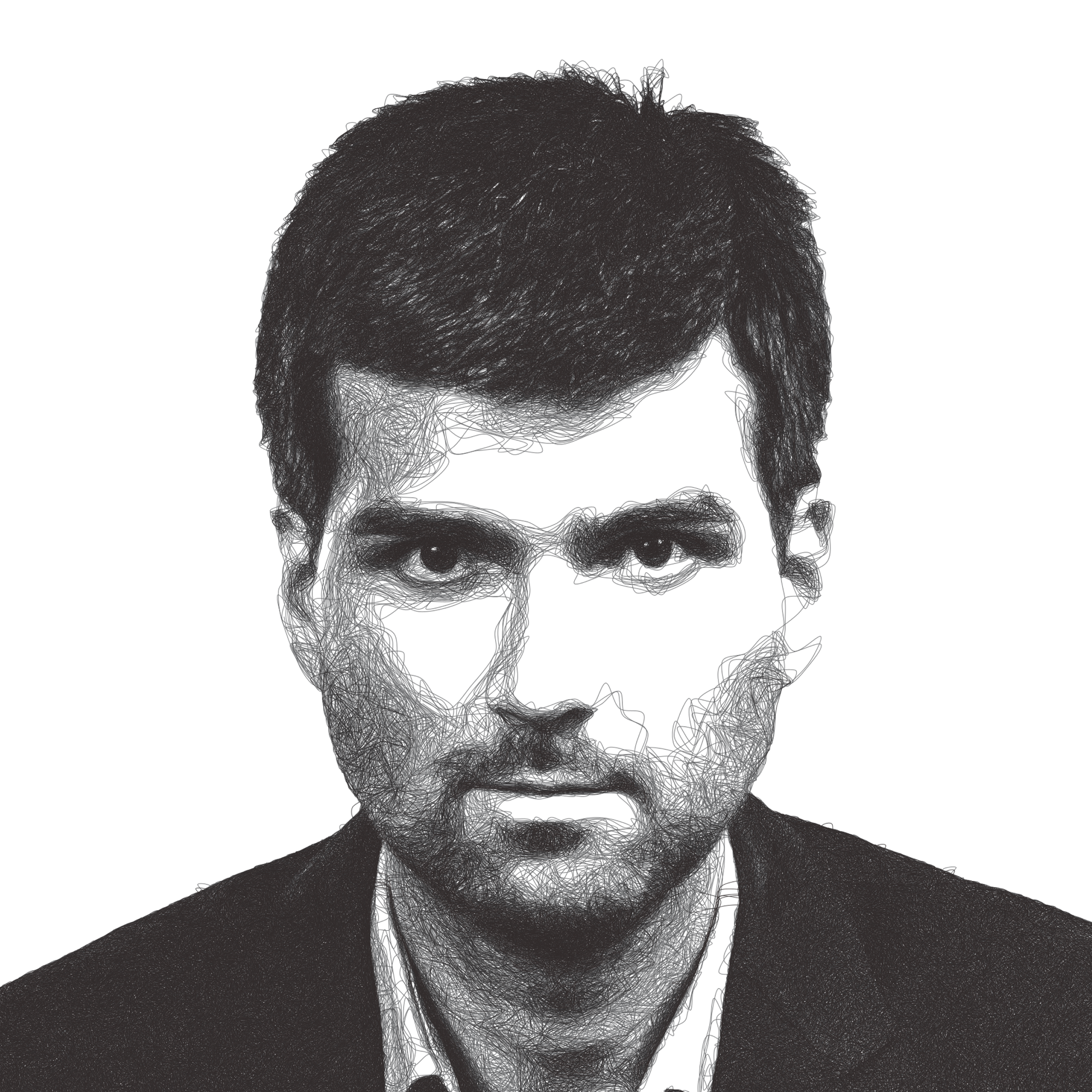
How did you get into deep tech investing, and what led you to launch Beyond Earth Ventures?
My background is mostly in web development going back about 15 to 20 years. I built a startup in fintech and was quite early in blockchain, back in 2015. At that time, no one knew who Vitalik Buterin was. I attended his workshops where there were maybe 10 people. I built the first tokenized fund in the space, and it was really popular. We had about 13,000 investors, and I spent roughly $2,000 in marketing for the project. But the sector started to deteriorate, and I didn't like what was happening, so I decided to exit. I'm still a big supporter of Bitcoin,Ethereum and DeFi protocols, but I switched my focus to venture capital.
Since 2018, I've done more than 100 direct investments in early-stage startups. I was fortunate to invest in companies like Deel after Y Combinator and exited in 2021. It was one of the best investments of my career. Then in 2022, I shifted my focus to deep tech. I had this thesis that we had done so much in software but so little in hardware. I understood it was capital-intensive and the timelines were long, but there were millions of companies building software solutions and so few building hardware, especially in the United States.
I was early in some very good companies. Impulse Space, built by Tom Mueller. I was an early investor in Stoke Space as well. I also invested in Anthropic some time ago. I think I have a feel for the sectors and the companies. I don't have a technical background in hardware. My background is business and economics. But I teamed up with colleagues who have Ph.D.s in energy, space technology, and computer science. We started as a syndicate, and then in March 2025, we launched Beyond Earth Ventures. I'm not just a general partner. I'm an investor in the fund as well, with my own commitment beyond the GP commitment. That is why I position myself as an investment partner.
Can you give an overview of Beyond Earth Ventures and its investment thesis?
Beyond Earth Ventures is a $30 million fund that started deploying capital in March 2025. We've done seven deals so far. Our portfolio includes Lunar Outpost, Origami Robotics from Y Combinator, Efficient Computer, Xona Space Systems, Zeno Power, SkyFi, and Tandem PV. Our initial check size is $200,000 to $500,000, with potential follow-on investments up to $2 million. The sectors we invest in are space tech, robotics, compute, and energy, where we focus on nuclear and solar.
What connects these diverse sectors under one fund?
When we started the syndicate, it was a pure space tech vehicle. But in 2024 and 2025, we realized that most of the best space tech companies were too late-stage for us. Companies like Impulse Space and Stoke Space already had high valuations. Many of the newer companies we were seeing were either poor quality or overpriced. So we expanded our thesis.
The overarching idea behind Beyond Earth Ventures is now U.S. reindustrialization. We see a huge gap between the United States and China. Geopolitics is very related to economics, and if we don't invest in industrial sectors now, that gap will increase. Even in space tech, China is arguably one or two steps ahead of the U.S. right now. American founders need to mobilize and push harder.
The U.S. was very strong in software and relied heavily on the global supply chain, particularly the Chinese supply chain. Now that supply chain is starting to fracture, and we see massive gaps in rare earth materials, solar, and nuclear. That is our thesis.
How does building conviction in hardware differ from investing in software?
Software is much faster to market. You can build an MVP and test it with an audience quickly. In hardware, it's not that easy because it's time-consuming and capital-intensive. You need time to test your hypothesis.
But what we see right now is that hardware companies are not struggling to raise capital if they have a truly good product. Andreessen Horowitz and Founders Fund are switching their focus to hardware. Three or five years ago, could you imagine Andreessen Horowitz investing in a hypersonic company? Of course not. But now they are. Peter Thiel is investing in energy companies, space tech companies, and defense companies. Defense is doing really well. I think the best venture capital funds clearly understood the industrial gap several years ago and shifted their focus to these sectors. It's very capital-intensive and difficult to build, but the best companies have no problems with funding at all.
What is your view on the viability of the lunar economy?
When I talk about space tech, I usually talk about it in relation to the defense sector. The whole idea of a moon base is not about economics or doing business on the moon. It is about geopolitics. It is about winning the competition. When people come to me and say they're going to mine helium-3 on the moon, to me it sounds like science fiction. The moon is about the strategic competition. That is it.
My bet when I invest in companies building lunar rovers is that the government budget is huge and only 10 to 15 companies will benefit from it. It is not about commercial contracts. It is about government contracts, and those contracts are enormous. We see valuations growing rapidly for companies building in sensitive, national security areas. Look at Impulse Space. The company's valuation was about $30 million roughly two years ago. Now it's approaching $4 billion.
That said, I think there are real commercial applications in low Earth orbit. Earth observation and communications are huge. Starlink is massive, and we all know it's the main business at SpaceX. That's why I believe in Xona Space Systems. They're building what is essentially a new positioning, navigation, and timing system for Earth. The first applications will be defense, but over 10 years, Xona could fully replace GPS if they build a large enough constellation.
Low Earth orbit applications that serve Earth will benefit and can be easily commercialized. Lunar applications, no. I still believe that is about geopolitics. Defense is the driver. For some people, that sounds grim, but that is reality.
What is the main thing that changed in the space economy in recent years?
Now everything is built by private companies. That is a huge shift. NASA is not building things themselves anymore. Everything is being built by private companies, from large ones like SpaceX to small startups like Xona and Lunar Outpost. And the old infrastructure is really outdated. GPS doesn't work as well as it used to. I clearly see a lot of commercial applications in space, especially in low Earth orbit. But even with Earth observation, most of the use cases are defense use cases. Defense is historically the first anchor customer for breakthrough technologies, and that pattern continues.
Where do you see the most promise in robotics?
AI is a huge enabler of robotics right now. We couldn't have imagined this kind of robotics just several years ago. For me, robotics is mostly about manufacturing. I don't believe humanoids will serve us at home. That's probably a little creepy, and there is still a long way to go for improvement. When you see the videos from companies like Figure AI, with a valuation around $30 billion, we are still just seeing videos. The movements of the hands are still quite poor.
I believe the most important component of a humanoid is the hand. We do most of our work with our hands, so if you want to replace a human, you need sophisticated hands. The more sophisticated the hand, the more sophisticated the work you can do. But the real near-term opportunity is industrial robotics. It is not about robots that look like humans. It is about automation, about doing more sophisticated jobs, assembling parts, and making workers more efficient in their roles.
Robotics are becoming smarter because of AI. They can do more than just the specific tasks they've been programmed for. They can assess a situation and figure out how to accomplish a job. That shift from programmed behavior to adaptive intelligence is what I mean when I say AI is the enabler.
How do you view the reindustrialization of the United States and its competition with China?
Globalization is broken right now. There will be a period where national technology is at the forefront, and the most important thing for countries is to attract talent. The more talent you have, the better technology you can build. The main competition for talent is between the U.S. and China, across every sector: space, semiconductors, robotics, humanoids, electric vehicles, nuclear, and solar.
I do not invest in Europe at the moment. There is talent there, but the talent is very relaxed. And the bureaucracy is insane. When we invest in a U.S.-based company, it takes us about one day to close the deal. In Europe, it can take days, weeks, or months. It just doesn't work.
What do you look for in early-stage deep tech founders?
I'm not looking for specific technologies. I'm mostly looking for specific people. I have filters. I look for engineers coming out of SpaceX, Radiant, Airbus, Boeing, Anduril. People who are starting to build their own companies. That is how I find early-stage opportunities. I find them before Y Combinator and the accelerators, and I ask them what they're building.
Sometimes these things are unpredictable. You find people building things you never thought about. The high-level areas I focus on are nuclear, solar, robotics, compute, space tech, and defense. But the specific solutions depend entirely on the founders. I want to see that there is demand for their product, because I know many cases where founders build very good technology but nobody needs it. It is just science. That is a very common problem in deep tech. I want to see a clear go-to-market strategy.
Most of the customers for these early-stage companies are government customers or government-backed. At the end of the chain, there is the government's budget. A company might be building parts for Anduril, but who is Anduril's main customer? The government. The whole supply chain works that way. We are at the point where we can build the new Lockheeds, the new Boeings, the new Raytheons.
I also think there is too much froth in the early-stage deep tech ecosystem. I see too many startups with too much marketing and too little substance. Some VCs don't have a deep enough understanding, and they're backing weak companies. That's a waste of time and money. But the best companies and the best founders have no problems with funding.
How do you define deep tech?
Deep tech is first and foremost about hardware and science. It is about building physical things, not software. And it is something that is very difficult and sophisticated to implement and assemble. You can build physical products that are fairly simple. That is not deep tech. But something rooted in advanced science and very difficult to build physically. That is deep tech.

Infinite Frontiers is made possible by HAUS, the leading public relations agency for deep tech startups and scaleups.